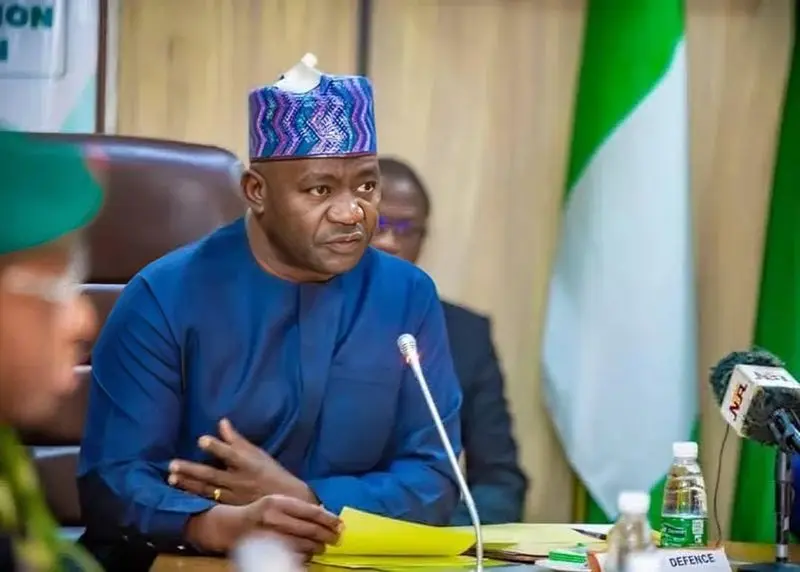
Nigeria’s Minister of Defence, Mohammed Badaru Abubakar, has summoned an emergency meeting with the country’s top military leadership following growing concerns over the worsening security situation in several parts of the country.
The high-level meeting, which involves the nation’s service chiefs, is aimed at reviewing ongoing security operations and developing new strategies to address the rising wave of violence and criminal activities affecting many communities. The discussions are expected to focus on strengthening coordinated military responses, improving intelligence gathering, and deploying additional resources to troubled regions.
Among those expected to participate in the meeting are the Chief of Defence Staff, Christopher Musa, the Chief of Army Staff, Taoreed Lagbaja, the Chief of Naval Staff, Emmanuel Ikechukwu Ogalla, and the Chief of Air Staff, Hassan Bala Abubakar. The service chiefs will provide detailed briefings on the current security situation across the country and outline the challenges confronting military operations.
Nigeria has in recent times experienced an escalation of security threats, including banditry, kidnappings, insurgent activities, and communal conflicts in various states. Several rural communities have been affected by violent attacks, leading to casualties, displacement of residents, and destruction of property.
Security experts say the emergency meeting reflects the federal government’s growing concern over the situation and its determination to reassess the country’s security architecture. The defence minister is expected to demand updated operational reports from each branch of the armed forces while also pushing for more aggressive and coordinated actions to restore stability.
Officials within the defence establishment indicated that the meeting will also evaluate the effectiveness of current military deployments and determine whether additional troops, equipment, or surveillance support will be required in certain hotspots.
In addition to reviewing operations, the defence leadership is expected to discuss improved collaboration with other security agencies, including intelligence services and law enforcement bodies, to ensure a unified response to emerging threats.
The outcome of the meeting could lead to the implementation of new tactical measures aimed at curbing attacks and protecting vulnerable communities. It may also result in the restructuring of certain operations to ensure faster response times and better coordination among security units.
As the security situation remains a major concern for many Nigerians, the government is under increasing pressure to deliver decisive actions that will bring lasting peace and stability to affected regions. The emergency engagement between the defence minister and the service chiefs is therefore seen as a crucial step toward strengthening the country’s efforts to tackle the complex security challenges confronting the nation.