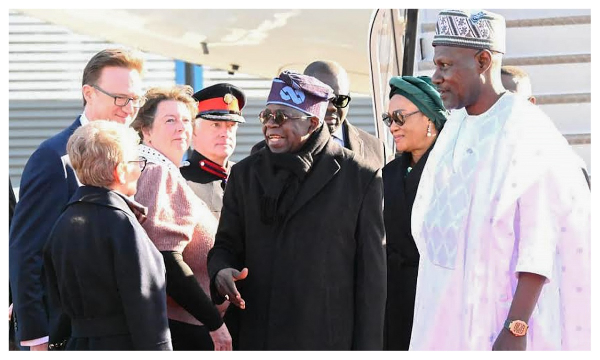
A group of prominent figures within the All Progressives Congress (APC) have voiced strong concerns over the recent trip of President Bola Ahmed Tinubu to the United Kingdom, describing the visit as poorly timed and reflective of a disconnect from the realities facing Nigerians.
Among those who spoke out were party stakeholders including Abdullahi, Mukhtar, and Bakoji, alongside other concerned voices within the ruling party. They collectively expressed disappointment, arguing that the president’s decision to travel abroad at a time of mounting economic hardship and security concerns sends the wrong signal to citizens.
The critics emphasized that Nigerians are currently grappling with rising inflation, high cost of living, and persistent insecurity in various parts of the country. According to them, leadership requires physical presence and active engagement, especially during periods of national difficulty. They argued that the president’s absence, regardless of the purpose of the trip, could be interpreted as a lack of urgency and empathy toward the struggles of ordinary citizens.
Some of the party members further noted that while international engagements are a routine aspect of governance, such trips should be carefully weighed against domestic priorities. They insisted that the optics of traveling abroad amid widespread public dissatisfaction risk eroding confidence in the administration.
In their remarks, the concerned APC figures called for a more people-centered approach to governance. They urged the president to demonstrate stronger commitment by staying closer to the ground, directly addressing pressing issues, and communicating more effectively with the public.
However, other voices within the party have reportedly defended the trip, suggesting that it may have strategic or diplomatic importance. They argued that engagements outside the country can attract investments, strengthen bilateral relations, and ultimately benefit Nigeria’s long-term development.
Despite these differing perspectives, the criticism highlights growing unease within sections of the ruling party itself. Political observers note that such internal dissent could signal broader concerns about governance style and responsiveness as the administration continues to navigate complex national challenges.
The development underscores the increasing demand from citizens and political stakeholders alike for visible, empathetic, and proactive leadership in addressing Nigeria’s current socio-economic realities.