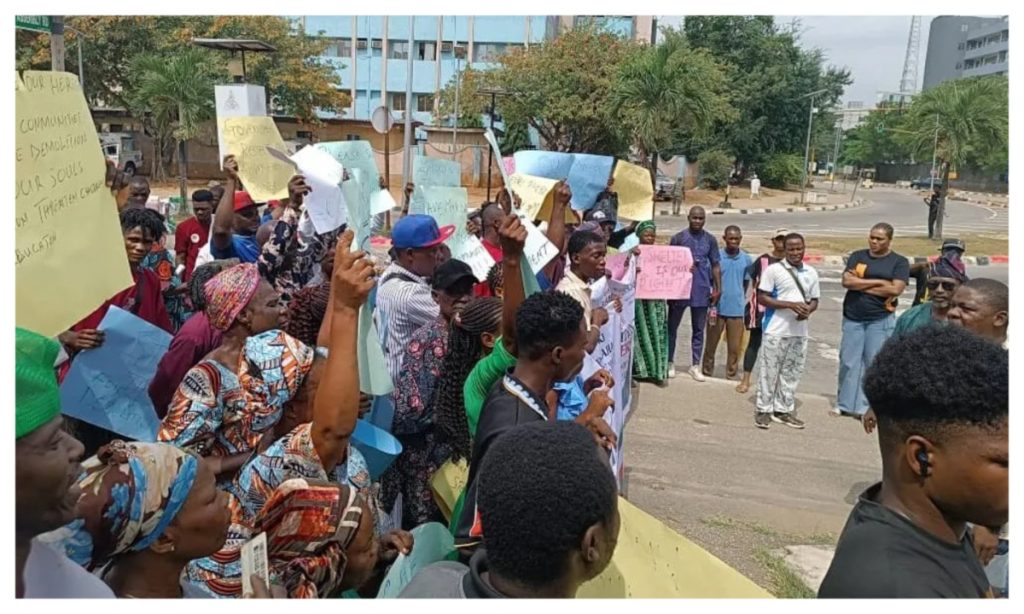
Protests erupted in Lagos following demolition activities in the Makoko area, as residents took to the streets to express anger and frustration over the destruction of homes and livelihoods within the waterfront community.
Eyewitnesses reported that affected residents, including women and youths, gathered in large numbers, blocking roads and chanting slogans to draw attention to their plight. The protesters accused authorities of carrying out the demolition without adequate notice, consultation, or provision of alternative accommodation, leaving many families displaced.
According to residents, the demolished structures served as homes and sources of income, with several people claiming they lost personal belongings and means of livelihood in the process. They described the situation as devastating, stating that the action had worsened already difficult living conditions.
Security operatives were deployed to the area to maintain order and prevent the protest from escalating into violence. While the protest remained largely peaceful, tension was high as demonstrators demanded immediate intervention and dialogue with government officials.
Community leaders appealed for calm but insisted that the grievances of residents must be addressed. They called on the government to suspend further demolition, engage affected communities, and provide humane solutions, including resettlement plans and compensation where necessary.
The Makoko area, known for its dense population and informal settlements, has long been at the center of debates over urban development, environmental concerns, and residents’ rights. The latest demolition and subsequent protest have once again highlighted the challenges of balancing city planning with social justice.
As of the time of reporting, authorities had not issued a detailed statement on the protest, but residents vowed to continue peaceful demonstrations until their concerns are acknowledged and concrete steps are taken to address the impact of the demolition.