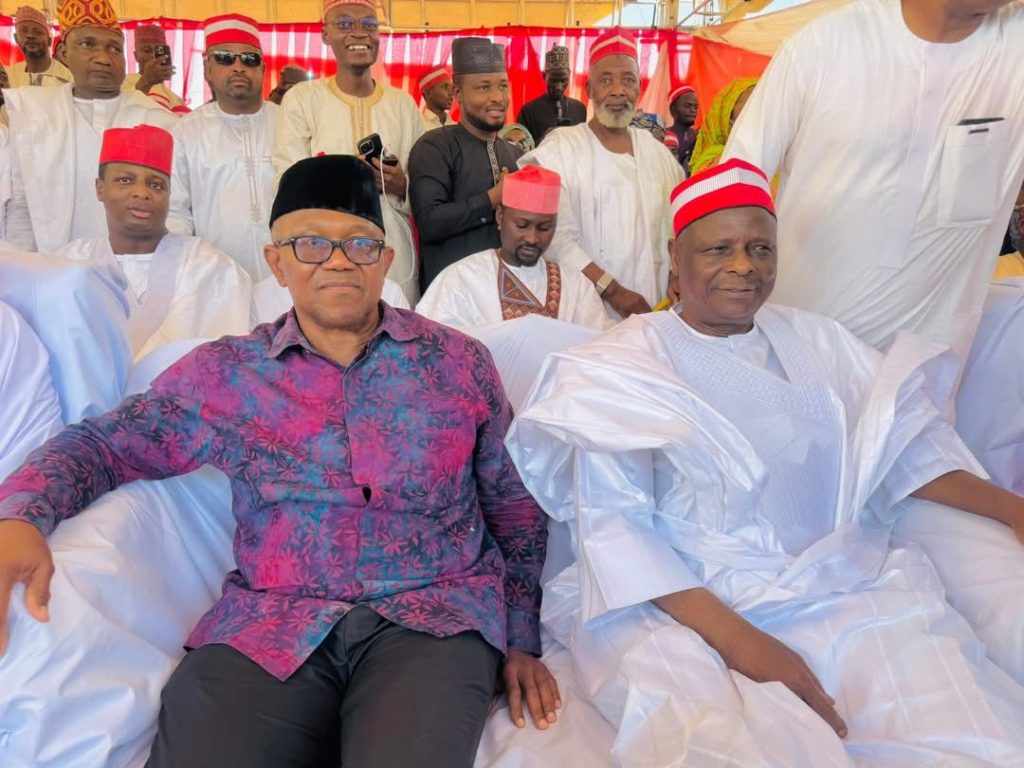
Political dynamics across Northern Nigeria are showing signs of strain following the announcement of a joint presidential ticket by Peter Obi and Rabiu Musa Kwankwaso under the platform of the National Democratic Coalition (NDC) ahead of the 2027 general elections.
The development has triggered mixed reactions among political stakeholders, traditional leaders, youth groups, and party loyalists across the northern region. While some see the alliance as a strategic move capable of reshaping Nigeria’s political landscape, others argue it risks deepening existing divisions within the region’s political structure.
Supporters of the joint ticket believe the collaboration combines Obi’s appeal among reform-minded voters with Kwankwaso’s established grassroots influence in parts of Northern Nigeria. They argue that the alliance could present a formidable alternative to dominant political blocs, especially if it succeeds in mobilizing young voters and disenchanted citizens seeking a shift from conventional party politics.
However, critics within the region have expressed reservations. Some political figures have questioned the ideological compatibility of the alliance, pointing to differences in policy priorities and regional interests. Others are concerned about the potential marginalization of long-standing northern political actors who may not align with the new coalition.
There are also indications of internal disagreements among key stakeholders in the North, particularly regarding zoning arrangements, power-sharing expectations, and the perceived balance of influence between the two camps. These concerns have led to emerging factions, with some leaders calling for broader consultations before fully committing to the NDC platform.
Grassroots reactions have been equally divided. In some areas, the announcement has generated enthusiasm, especially among younger voters who view the alliance as a break from entrenched political patterns. In others, skepticism remains high, with questions about the coalition’s capacity to address longstanding regional challenges such as security, economic development, and infrastructure deficits.
Political analysts note that the success of the joint ticket will depend largely on its ability to unify diverse interests within the North while also building a nationwide coalition strong enough to compete effectively in 2027. They emphasize that early momentum, clear policy direction, and internal cohesion will be critical factors in determining whether the alliance can translate its announcement into electoral strength.
As the political landscape continues to evolve, attention is expected to focus on how other major parties and influential figures respond to the emergence of the NDC ticket, and whether ongoing negotiations or realignments will further reshape the path to the 2027 elections.