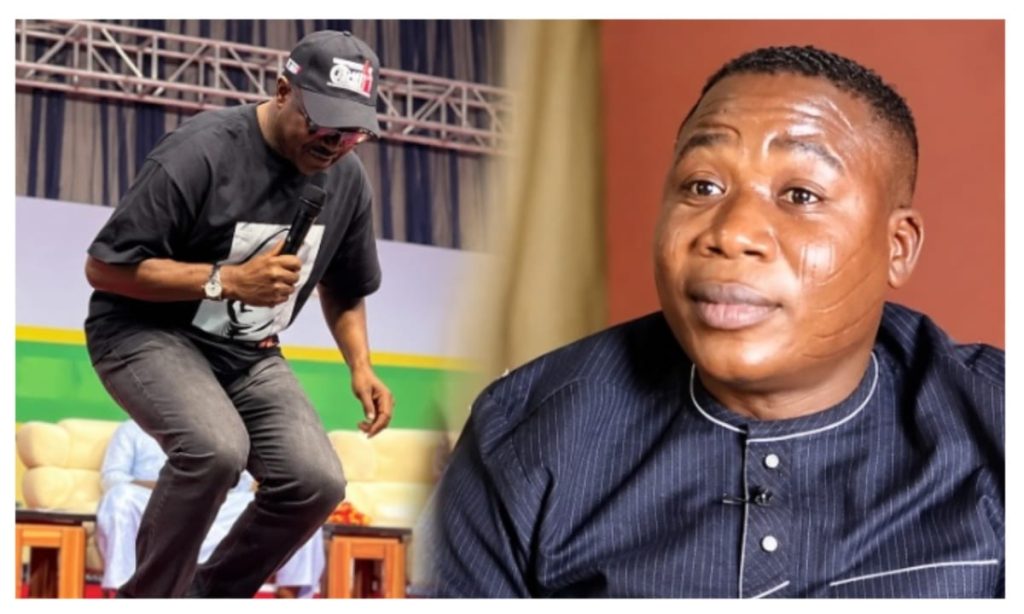
Yoruba nation activist Sunday Adeyemo, popularly known as Sunday Igboho, has criticised Oyo State Governor Seyi Makinde over his recent remarks concerning presidential candidates ahead of the 2027 general elections.
Igboho accused Makinde of making comments he interpreted as a mockery of President Bola Ahmed Tinubu and warned that he would respond to anyone who publicly insulted the Nigerian leader.
The activist made his position known while addressing a gathering of the Iru Ekun Security Network, where he expressed strong displeasure over what he considered disrespectful remarks directed at the President.
Igboho Reacts to Makinde’s Presidential Stamina Challenge
The controversy followed Makinde’s remarks at a South-West town hall meeting held in Akure, Ondo State, where he challenged presidential aspirants to demonstrate their physical energy and stamina ahead of the 2027 presidential election.
Makinde reportedly demonstrated his point by jumping down from the stage and challenging other presidential candidates to do the same.
The Oyo State governor argued that physical energy, rather than age, should be a consideration when assessing candidates seeking the country’s highest political office.
However, Igboho interpreted the demonstration as an indirect attempt to ridicule Tinubu, prompting his criticism of the governor.
Although Makinde’s challenge was directed at presidential candidates generally, Igboho maintained that public officials should exercise caution when making remarks that could be perceived as disrespectful towards the President.
‘Anyone Who Insults Tinubu Will Get the Same Treatment’
During his remarks, Igboho expressed his displeasure with Makinde’s comments and warned that he would not remain silent if anyone insulted Tinubu.
The activist accused the governor of mocking the President and questioned the manner in which he presented his argument about the physical stamina of presidential candidates.
Igboho also cautioned against making disparaging comments about elderly people, arguing that respect should remain an important consideration in public discourse.
His comments underscored his support for Tinubu and his determination to defend the President against what he considers personal attacks.
Igboho Expresses Gratitude to Tinubu
Beyond his criticism of Makinde, Igboho also expressed appreciation to President Tinubu, acknowledging the role he believes the President played in facilitating his return to Nigeria after spending years outside the country.
The activist’s remarks highlighted his support for the President and provided further context for his reaction to comments he perceived as an attack on Tinubu.
Igboho had previously spent time outside Nigeria following security-related controversies in 2021. His eventual return followed interventions involving traditional rulers and other stakeholders.
His latest comments suggest that his support for Tinubu remains a significant factor in his public statements on political developments.
Political Tensions Build Ahead of the 2027 Elections
The disagreement comes as political activities intensify ahead of Nigeria’s 2027 general elections, with political figures positioning themselves and making their views known on leadership, governance and the country’s future.
Makinde has been critical of aspects of the Tinubu administration and has presented his own political ambitions as part of the broader debate over Nigeria’s leadership.
The governor’s presidential aspirations have also brought his views on governance and political competition into sharper focus.
Igboho’s intervention adds another dimension to the unfolding political discussions, particularly within the South-West, where Tinubu, Makinde and other prominent political figures have significant political interests.
The exchange also highlights the growing influence of public commentary, political loyalty and personal disagreements in shaping conversations ahead of the next election.
Freedom of Expression and Respect in Political Debate
The incident raises broader questions about the boundaries of political criticism and the importance of respectful public discourse in a democratic society.
While political leaders and citizens have the right to express opinions, criticise government policies and challenge public officials, disagreements can become contentious when they are interpreted as personal insults.
Nigeria’s democratic system allows citizens and political actors to scrutinise elected officials, including the President. At the same time, public figures are expected to engage in political disagreements without encouraging hostility or intimidation.
Igboho’s warning to Makinde is therefore likely to attract further debate about political loyalty, freedom of expression and the role of influential individuals in Nigeria’s political environment.
As the 2027 elections approach, the reactions of political leaders, activists and their supporters will continue to shape public discussions about the country’s leadership and democratic future.