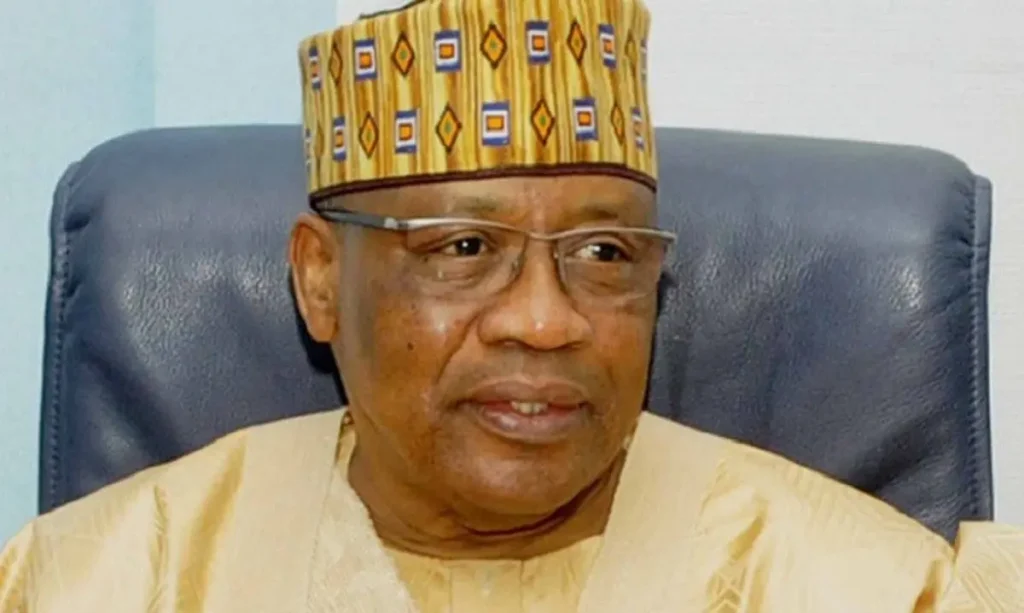
Former Nigerian military Head of State, Ibrahim Badamasi Babangida, has said that no military coup can successfully take place without some level of civilian involvement or support.
Babangida, popularly known as IBB, made the remark while reflecting on Nigeria’s political history, particularly the relationship between military interventions and civilian political actors.
According to him, military coups should not be viewed solely as actions carried out by soldiers. He argued that civilian interests, political grievances and support from individuals outside the military establishment can also play significant roles in creating the circumstances that make military intervention possible.
The former military leader’s comments have renewed discussions about Nigeria’s history of military rule and the factors that contributed to repeated interruptions of democratic governance in the country’s past.
Nigeria experienced several military interventions following independence, with military administrations taking power at different points in the nation’s history before the country eventually returned to sustained democratic rule in 1999.
Babangida himself ruled Nigeria as military president from 1985 to 1993, following the overthrow of the administration of Major General Muhammadu Buhari.
During his time in office, his administration introduced significant political and economic reforms while also supervising a prolonged transition programme aimed at returning the country to civilian democratic rule.
His government was ultimately dissolved after the annulment of the June 12, 1993 presidential election, an event that remains one of the most controversial episodes in Nigeria’s political history.
Reflecting on military interventions more broadly, Babangida’s position suggests that political instability cannot always be attributed exclusively to the armed forces.
Civilian actors may contribute to an environment in which military intervention becomes possible through political mobilisation, public dissatisfaction, elite disagreements or direct and indirect support for military actors.
The former military ruler’s comments also highlight the importance of strong democratic institutions, constitutional governance and peaceful political processes in preventing military intervention.
Since Nigeria returned to democratic rule in 1999, successive governments have operated under constitutional civilian authority, while the military has formally remained subordinate to elected political leadership.
The issue of military coups has nevertheless continued to attract attention across Africa, particularly following military takeovers in several countries in recent years.
For Nigeria, the country’s political leadership and security institutions have consistently maintained that democratic governance should be protected and that political disputes should be resolved through constitutional mechanisms.
Babangida’s latest comments therefore provide another perspective on the historical relationship between military interventions and civilian politics.
His position is that understanding coups requires looking beyond the soldiers who physically seize power and examining the wider political circumstances and civilian networks that may facilitate such actions.
The debate also underscores the responsibility of political leaders, citizens and institutions to strengthen democracy, promote accountability and address grievances through lawful means rather than supporting unconstitutional changes of government.