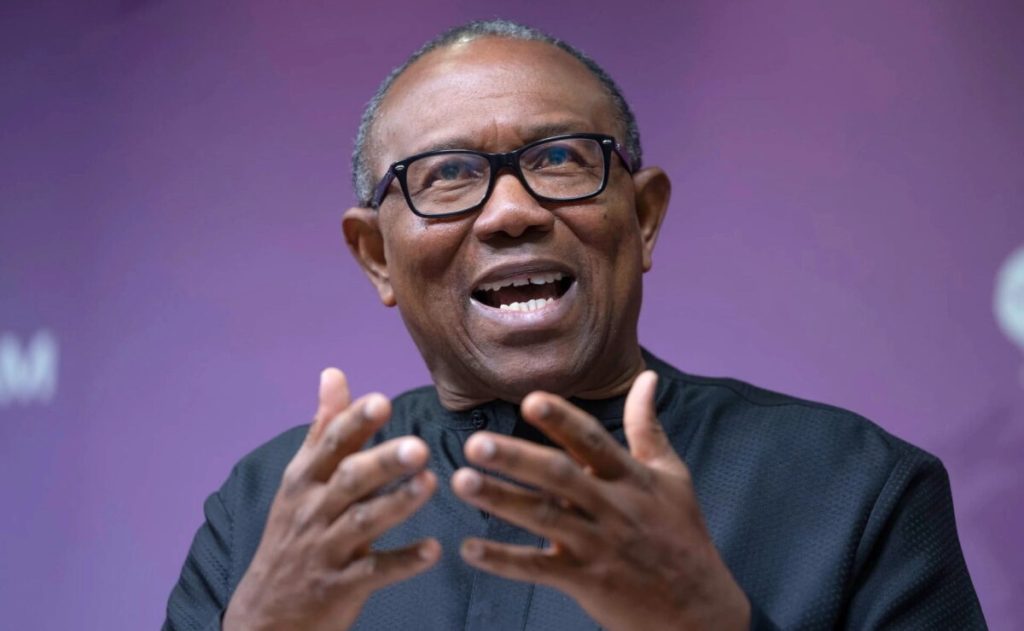
Peter Obi, a former governor of Anambra State and presidential candidate of the Labour Party in the 2023 general election, has reiterated his commitment to running a national political campaign in 2027 that prioritises competence, accountability and national unity over ethnic or religious considerations.
Obi said the next electoral contest should not be reduced to divisions based on ethnicity, religion or regional identity, stressing that Nigeria’s political future depends on citizens evaluating candidates based on their ideas, leadership capacity, integrity and ability to address the country’s economic and social challenges.
According to him, Nigeria requires a political approach capable of bringing together people from different regions, faiths and ethnic backgrounds around common national interests.
Focus on national unity
Obi’s position reflects a broader argument that political leadership should transcend sectional interests. He maintained that Nigerians should be encouraged to see themselves first as citizens of one country rather than allowing ethnic and religious identities to determine political choices.
He is expected to emphasise issues such as economic development, employment creation, security, education, healthcare, infrastructure and institutional reform as central elements of his political message ahead of the 2027 elections.
The former Anambra governor has consistently positioned himself as an advocate of a more productive and accountable political system, with greater emphasis on investment in human capital and productive sectors of the economy.
Zonal strategy
As preparations for the 2027 political season gradually take shape, Obi has also outlined a strategy aimed at strengthening his political engagement across Nigeria’s six geopolitical zones.
The approach is expected to involve broader consultations with stakeholders, political groups, community leaders, professionals, young people, women and other sections of society.
Rather than presenting the election as a contest between regions, the strategy seeks to build support around issues that affect Nigerians irrespective of where they live.
The six geopolitical zones—North-West, North-East, North-Central, South-West, South-East and South-South—remain important components of Nigeria’s political structure, and effective mobilisation across the zones would be critical to any presidential campaign.
Emphasis on competence
A major component of Obi’s anticipated campaign message is likely to be the argument that leadership positions should be determined by competence and demonstrated capacity rather than ethnic origin or religious affiliation.
His supporters have frequently highlighted his record in Anambra State as part of the basis for his political appeal, while his critics and political opponents have challenged aspects of his record and political approach.
The 2027 contest is therefore expected to generate intense debate over governance, economic management, accountability and the qualifications of presidential candidates.
Economic concerns
The economic situation is also expected to remain one of the dominant issues in the 2027 election.
Nigerians are likely to demand clear proposals on inflation, purchasing power, unemployment, energy supply, public debt, infrastructure, industrialisation and investment.
Obi has previously advocated greater investment in productive sectors and a shift away from an economy heavily dependent on consumption and imports.
A campaign built around economic transformation would require detailed policies explaining how government would support businesses, improve productivity, attract investment and create sustainable employment.
Youth participation
Young Nigerians are also expected to play a significant role in the 2027 political process.
Obi’s political movement has attracted considerable support among young voters, particularly those seeking changes in the way political leadership is organised and evaluated.
A national campaign would therefore need to address youth unemployment, education, entrepreneurship, technology, digital opportunities and political participation.
Beyond electoral politics
Obi’s proposed approach also places emphasis on the need for citizens to participate actively in national development beyond election periods.
A campaign centred on national unity would require sustained engagement with different communities and political constituencies, while encouraging citizens to hold elected officials accountable for their promises.
The 2027 election is expected to be closely watched as political parties and aspirants begin positioning themselves, forming alliances and developing strategies for nationwide mobilisation.
For Obi, the challenge will be translating his call for an ethnicity- and religion-free campaign into a broad political coalition capable of securing support across Nigeria’s diverse geopolitical landscape.
Ultimately, the proposed strategy presents the 2027 election as an opportunity for Nigerians to focus more closely on leadership quality, policy choices and national development rather than allowing ethnic and religious considerations to dominate the political conversation.