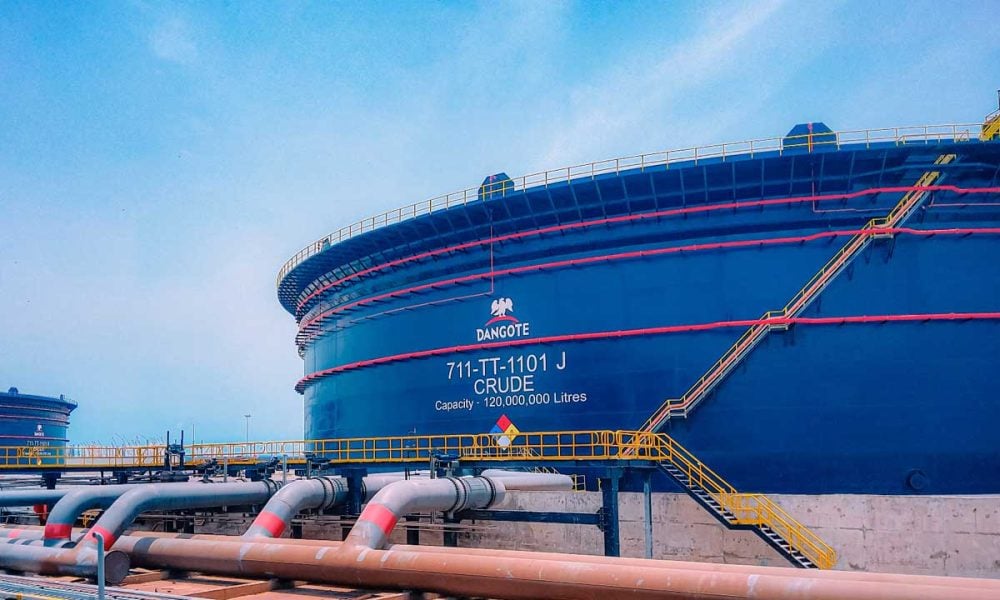
The planned initial public offering (IPO) of Dangote Refinery is generating significant interest as preparations advance for what is expected to be one of the most consequential capital-market transactions involving a Nigerian industrial company.Oil and gas analyst Iledare has highlighted the potential benefits for investors, particularly the opportunity to participate in the ownership of a strategically important refinery positioned at the centre of Nigeria’s effort to strengthen domestic petroleum-product supply.
The proposed transaction, valued at about $5 billion, would provide investors with an opportunity to gain exposure to the refinery’s operations, future earnings potential and broader growth prospects in the downstream petroleum sector.
Investment opportunity
An IPO would allow members of the investing public and institutional investors to acquire shares in the refinery, subject to the final structure, valuation, regulatory approvals and terms of the offer.
For investors, one of the major attractions would be exposure to a large-scale energy asset with the potential to generate revenue from the processing and sale of refined petroleum products.
The refinery’s scale could also provide opportunities to benefit from increasing demand for locally refined products, particularly as Nigeria seeks to reduce its dependence on imported petroleum products.
Potential benefits for investors
Iledare’s assessment centres on the possibility that investors could benefit from the refinery’s long-term commercial prospects.
Potential benefits include capital appreciation, if the company’s value increases after listing; dividend income, depending on future profitability and the company’s dividend policy; and exposure to the downstream oil and gas industry through an equity investment.
Investors could also benefit indirectly from the refinery’s integration into a broader energy and industrial ecosystem, particularly if the business expands its refining, distribution and related petroleum operations.
However, the actual returns available to shareholders would depend on the eventual offer price, company performance, market conditions, dividend decisions and other factors.
Strategic importance to Nigeria
The refinery represents a major development in Nigeria’s petroleum industry because domestic refining capacity has historically been insufficient to meet national demand consistently.
Increased local refining capacity has the potential to reduce pressure on foreign exchange associated with importing refined petroleum products. It could also strengthen domestic energy security and create opportunities across transportation, logistics, manufacturing and other industries that depend on petroleum products.
A successful IPO could therefore have implications beyond the company itself by deepening public participation in a major Nigerian industrial asset.
What the $5 billion valuation could mean
A transaction of approximately $5 billion would represent a substantial capital-market event. Such a valuation would place significant attention on the refinery’s financial performance, production capacity, operating costs, profitability and future growth strategy.
For prospective investors, valuation would be particularly important. A large company is not automatically a good investment simply because it operates a strategically important asset. Investors would need to consider whether the proposed share price adequately reflects the company’s earnings potential and risks.
The IPO documentation would therefore be critical because it should provide investors with information necessary to assess the investment opportunity, including financial statements, business risks, corporate structure, use of proceeds and details of the securities being offered.
Opportunities and risks
While the refinery presents significant opportunities, investors would also face risks.
These could include fluctuations in crude-oil prices, changes in petroleum-product prices, foreign-exchange movements, regulatory changes, financing costs, operational challenges and shifts in domestic and international energy markets.
Competition within the refining and petroleum-products market could also affect future profitability.
Investors would therefore need to examine the company’s financial position and business outlook carefully rather than relying solely on the size or prominence of the refinery.
Implications for the Nigerian capital market
The proposed listing could further strengthen the Nigerian capital market by creating an opportunity for investors to participate in one of the country’s most prominent private-sector industrial assets.
A major energy-sector listing could also attract greater attention from institutional investors, pension funds, asset managers and other long-term investors seeking exposure to Nigeria’s industrial and energy sectors.
The transaction could potentially increase market depth and provide an additional avenue for domestic savings to be channelled into productive investment.
Investors await final IPO terms
Despite the strong interest surrounding the proposed transaction, prospective investors would ultimately need to wait for the formal offer documentation and regulatory processes to establish the definitive terms.
Important details would include the number of shares being offered, offer price, minimum subscription, eligibility requirements, proposed listing arrangements, use of proceeds and the company’s financial and governance structure.
Until those details are formally established, the projected value of the transaction should be viewed as an indication of its anticipated scale rather than a guarantee of the final investment terms.
The proposed Dangote Refinery IPO nevertheless represents a potentially landmark development for Nigeria’s capital market. If successfully completed, it could give investors an opportunity to participate directly in the future of a major domestic refining business while providing the company with access to a broader pool of capital for expansion and long-term growth.