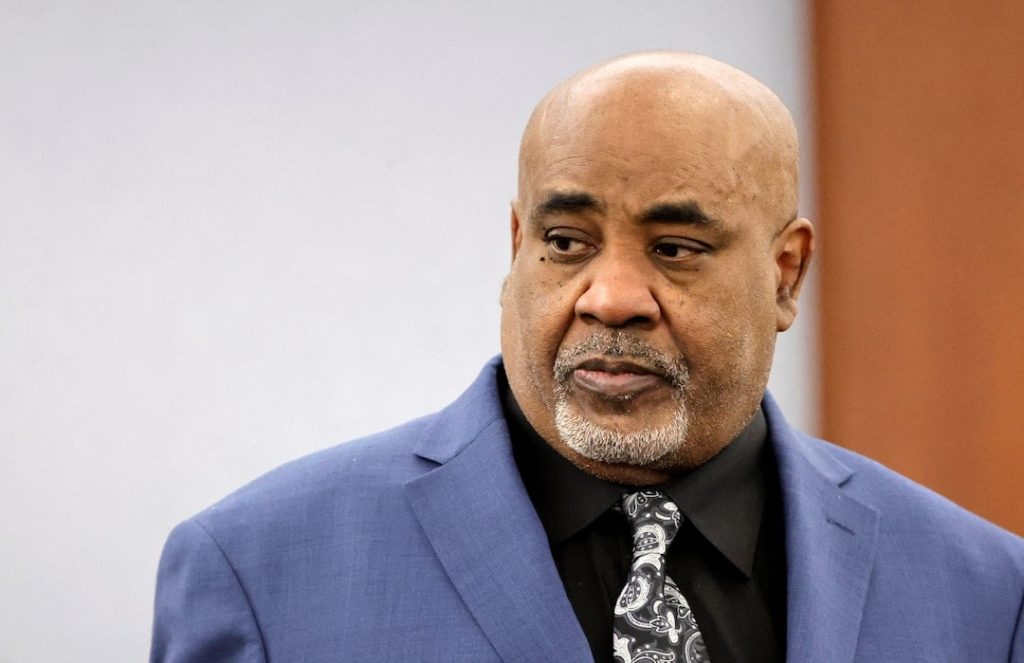
Duane “Keffe D” Davis, a former gang leader accused of orchestrating the 1996 killing of American rap legend Tupac Shakur, has been sentenced to 40 years to life in prison following his conviction for first-degree murder in Las Vegas, Nevada.
The sentence was handed down on Tuesday, October 13, 2026, bringing a major development in one of the most closely watched murder cases in hip-hop history.
Davis, 63, was convicted in August 2026 after prosecutors argued that he played a central role in organising the fatal drive-by shooting that claimed the life of the celebrated rapper nearly three decades ago.
Court Hands Davis 40 Years to Life
During the sentencing hearing, the court imposed consecutive prison terms of 20 years to life for murder and an additional 20 years to life for the use of a deadly weapon.
The decision followed a trial in which prosecutors presented evidence intended to establish Davis’s involvement in the shooting. The case had remained unresolved for decades, attracting widespread attention from music fans, investigators and the entertainment industry.
Presiding Judge Carli Kierny emphasised the seriousness of the crime, noting the devastating consequences of taking another person’s life and depriving their family of a loved one.
Davis showed little visible emotion during the proceedings. When given an opportunity to speak, he briefly requested the return of personal belongings seized from his residence during the investigation.
How Tupac Shakur Was Killed
Tupac Shakur, widely known as 2Pac, was shot on September 7, 1996, while travelling in a BMW driven by Marion “Suge” Knight, the co-founder of Death Row Records.
The shooting occurred in Las Vegas after an altercation involving members of rival gang groups earlier that evening.
A white Cadillac reportedly pulled alongside the vehicle carrying Shakur, and gunshots were fired at the rapper and Knight.
Shakur sustained multiple gunshot wounds and was taken to hospital. Despite medical treatment, he died six days later, on September 13, 1996, at the age of 25.
Knight survived the attack.
The killing became one of the most notorious unsolved cases in American music history, generating years of speculation about the identities of those responsible and the circumstances that led to the shooting.
Prosecutors Explain Davis’s Role in the Murder
During the trial, prosecutors maintained that Davis helped organise the attack following an earlier confrontation involving his nephew, Orlando Anderson, and members of Shakur’s entourage.
According to the prosecution’s case, the confrontation fuelled tensions that ultimately led to the fatal shooting.
Prosecutors alleged that Davis obtained a firearm and passed it to associates inside the Cadillac from which the shots were fired. They argued that, although Davis was not identified as the person who pulled the trigger, he played a significant role in arranging the attack.
The prosecution relied heavily on statements Davis had made over the years, including interviews and accounts of his involvement published in his 2019 memoir, Compton Street Legend.
Investigators had struggled for years to bring the case to trial before Davis’s arrest in September 2023.
Davis was the only person charged in connection with the killing, and the other men prosecutors identified as occupants of the Cadillac were no longer alive by the time the case reached trial.
Davis Maintains His Intention to Appeal
Despite the conviction and lengthy prison sentence, Davis has indicated that he intends to appeal the verdict.
His defence team challenged the prosecution’s case during the trial, arguing that the evidence linking him to the crime was insufficient and questioning the reliability of statements he had made about the shooting.
The defence also disputed the prosecution’s interpretation of Davis’s past accounts and maintained that his statements should not be treated as conclusive proof of his guilt.
However, the jury ultimately found him guilty of first-degree murder in August 2026.
Any appeal will provide another opportunity for the defence to challenge the conviction through the legal process.
Tupac’s Family Reflects on His Life and Legacy
The sentencing hearing also provided an opportunity for members of Tupac Shakur’s family to reflect on the loss they have endured since his death.
His sister, Sekyiwa Shakur, addressed the court and paid tribute to her brother, describing his importance to their family and his wider cultural legacy.
Tupac was more than a successful recording artist. His music frequently explored poverty, racial inequality, violence, social injustice and the challenges facing disadvantaged communities.
Songs such as California Love and Dear Mama helped establish his place among the most influential figures in hip-hop.
His work continues to reach new generations of listeners, while his death remains a defining moment in the history of American rap music.
For his family, the conviction and sentencing represent a significant development after years of waiting for the criminal case to reach a conclusion. However, no court decision can restore the life lost or erase the personal impact of the tragedy.
A Major Development in a Nearly 30-Year-Old Case
The sentencing of Duane “Keffe D” Davis marks a significant milestone in the investigation into Tupac Shakur’s murder.
For nearly 30 years, the case remained a subject of public fascination, with questions surrounding the shooting continuing to influence discussions about gang violence, celebrity security and the rivalry that characterised parts of the hip-hop industry during the 1990s.
Although Davis has now been convicted and sentenced, his stated intention to appeal means further legal proceedings may follow.
For Tupac’s family, friends and millions of admirers around the world, the case remains a painful reminder of the loss of an artist whose influence extended far beyond music.
The latest development is that Davis has received a sentence of 40 years to life in prison, while the legal process may continue if his planned appeal proceeds.