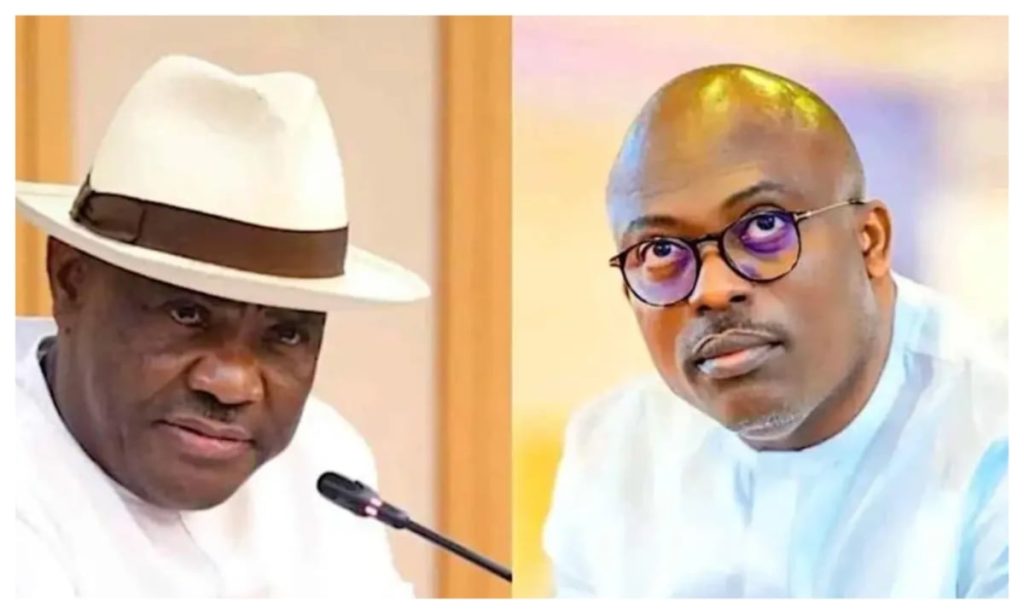
The African Democratic Congress (ADC) in Rivers State has alleged that the Minister of the Federal Capital Territory (FCT), Nyesom Wike, has been engaging in renewed political consultations with Rivers State Governor Siminalayi Fubara because of growing political pressure ahead of the 2027 general elections.
The party reportedly suggested that Wike’s recent moves reflect concerns about the changing political landscape in Rivers State and the need to protect his political influence in the state.
The allegation comes amid the prolonged political rivalry between Wike and Fubara, which has continued to attract attention within Rivers State and across Nigeria’s political scene.
However, the specific circumstances surrounding the reported meeting, including its date, agenda and whether both political figures have confirmed the discussions, require further verification.
ADC Questions Wike’s Political Motives
The Rivers State chapter of the ADC has questioned the reasons behind Wike’s reported engagement with Fubara, suggesting that the minister may be responding to political developments that could affect his influence ahead of the next general election.
The expression “running from pillar to post” was used to characterise what the party considers a series of political manoeuvres by Wike.
The allegation suggests that the minister may be seeking to consolidate his political position and maintain influence over developments in Rivers State as political calculations ahead of 2027 intensify.
Nevertheless, the ADC’s position represents a political interpretation of Wike’s reported activities and should not be treated as an established explanation for any meeting between the minister and the governor.
Background to the Wike-Fubara Political Dispute
The relationship between Wike and Fubara has been marked by a major political dispute that has significantly affected governance and party politics in Rivers State.
Wike, a former governor of Rivers State, played an influential role in the political process that brought Fubara to office in 2023.
However, tensions later emerged between the two men, resulting in a prolonged power struggle involving political loyalists, members of the Rivers State House of Assembly and other stakeholders.
The disagreement extended beyond their personal relationship and developed into a wider political crisis, with competing factions disputing authority and influence within the state.
The crisis also raised concerns about legislative activities, government administration and the potential consequences for political stability in Rivers State.
2027 Elections Increase Political Tensions
With the 2027 general elections approaching, political actors in Rivers State are expected to intensify consultations, alliances and negotiations.
For established political figures such as Wike, maintaining influence in the state remains an important consideration in the wider political environment.
The ADC’s allegation suggests that the reported engagement between Wike and Fubara should be viewed against this background.
However, political meetings can serve several purposes, including resolving disagreements, negotiating compromises, strengthening alliances or discussing governance matters.
Without an official explanation from the individuals involved, it would be premature to conclude that electoral calculations were the sole reason for any reported meeting.
Rivers Residents Expect Political Stability
The prolonged political disagreements in Rivers State have generated public debate about the need for stability, effective governance and responsible political leadership.
Residents expect political leaders to prioritise development, infrastructure, employment, education, healthcare and other issues affecting their daily lives.
Political disputes can distract public attention from these priorities, particularly when disagreements create uncertainty about government decisions or institutional relationships.
For this reason, stakeholders have an interest in seeing political differences resolved through dialogue and lawful democratic processes.
The reported engagement between Wike and Fubara, if confirmed, could attract further attention because of the history of their disagreement and the implications of any reconciliation for Rivers State politics.
Will Wike and Fubara Reconcile?
Whether the reported meeting represents a genuine attempt at reconciliation or a political consultation remains unclear.
A lasting resolution would likely require both sides to address the issues that contributed to their disagreement and establish a workable relationship.
Any agreement could also affect political alignments within Rivers State, particularly among supporters who have taken opposing positions during the crisis.
However, a meeting alone would not necessarily indicate that the dispute has ended or that either politician has abandoned existing political interests.
The positions of both men, as well as any concrete steps taken following their engagement, would provide a clearer indication of the direction of their relationship.
Conclusion
The Rivers State chapter of the African Democratic Congress has alleged that Nyesom Wike’s reported meeting with Governor Siminalayi Fubara may be connected to political calculations ahead of the 2027 general elections.
By describing Wike as “running from pillar to post,” the party offered a critical interpretation of the minister’s reported political activities.
The allegation comes against the backdrop of the prolonged disagreement between the former governor and his successor, a dispute that has influenced political developments in Rivers State.
Whether the reported meeting signals reconciliation, strategic negotiation or another stage in the political contest remains uncertain.
For now, the central issue is whether the political actors involved can resolve their differences while ensuring that the interests of Rivers State and its residents remain a priority.
Editorial note: The ADC’s precise statement, the identities of the party officials who made the allegation, and the details of the reported Wike-Fubara meeting should be verified before publication. The article presents the political claim as an allegation rather than an independently established fact.