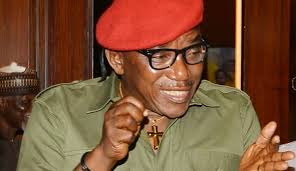
A former minister who served under Muhammadu Buhari has publicly expressed strong views about the political trajectory of Nasir El-Rufai, suggesting that the ex-governor made a strategic error by stepping back from the political frontline after the 2023 general elections.
According to the former minister, El-Rufai’s decision to “surrender” — interpreted as withdrawing from active political contention and influence at the federal level — may have weakened his bargaining power within the ruling establishment. He argued that El-Rufai, known for his assertive leadership style and reform-driven governance during his tenure in Kaduna State, had built significant political capital that could have been leveraged more effectively in shaping national policy and direction.
The ex-minister further claimed that elements within the administration of Bola Ahmed Tinubu are wary of El-Rufai’s political weight and capacity to influence public opinion. He suggested that this perceived apprehension stems from El-Rufai’s track record of bold decision-making, his technocratic approach to governance, and his network across key political blocs in the country.
He noted that El-Rufai remains a prominent figure whose voice still resonates within political and policy circles, despite his current lower profile. According to him, this lingering influence may explain why some actors in government circles prefer to keep him at arm’s length.
The former minister also reflected on the internal dynamics of the ruling party, hinting at underlying tensions and unresolved rivalries that have persisted since the transition of power. He emphasized that politics at the highest level often involves managing strong personalities and competing ambitions, and that El-Rufai’s presence naturally introduces a complex layer to that equation.
While acknowledging the current administration’s efforts to stabilize governance and implement reforms, the former minister maintained that sidelining experienced figures like El-Rufai could be counterproductive in the long run. He argued that inclusive leadership and the strategic use of seasoned political actors are essential for navigating Nigeria’s multifaceted challenges.
As political activities gradually begin to build toward future electoral cycles, observers believe that El-Rufai’s next move will be closely watched, particularly in terms of whether he reasserts himself more forcefully on the national stage or continues to operate behind the scenes.