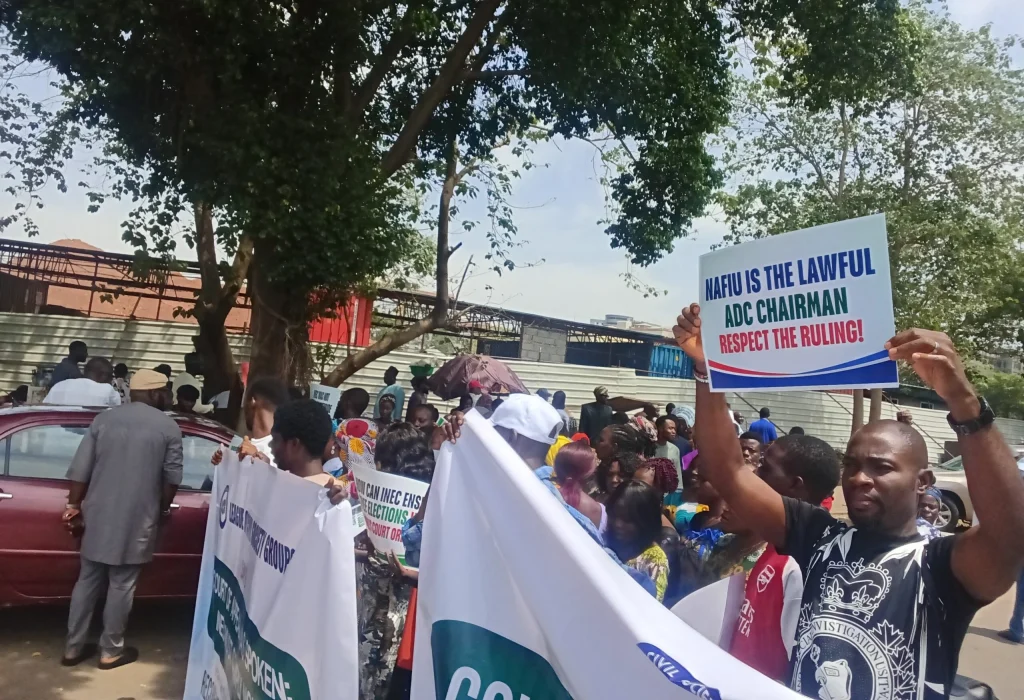
A coalition of prominent political figures, including Atiku Abubakar, Peter Obi, Rabiu Musa Kwankwaso, Rotimi Amaechi, and Aminu Tambuwal, have come together under the platform of the African Democratic Congress (ADC) to formally lodge a protest with the Independent National Electoral Commission (INEC).
The group, made up of influential opposition leaders from different political backgrounds, is challenging recent developments within the electoral system, raising concerns about transparency, fairness, and adherence to democratic principles. Their joint action signals a rare moment of alignment among key opposition figures, many of whom have previously contested against one another in national elections.
According to details from the protest, the leaders are questioning certain decisions and processes overseen by INEC, which they argue could undermine public confidence in the electoral framework. They are calling for a thorough review of the issues raised, alongside greater accountability and institutional reforms to strengthen the credibility of future elections.
The protest, carried out under the ADC banner, is seen as a strategic move to consolidate opposition voices within a single platform, potentially reshaping political alliances ahead of upcoming electoral cycles. Analysts suggest that this development may indicate early signs of coalition-building among opposition forces seeking to present a united front.
Supporters of the movement gathered in solidarity, emphasizing the need for electoral integrity and the protection of democratic values. The leaders, in their remarks, stressed the importance of ensuring that the will of the people is accurately reflected in election outcomes, urging INEC to address their concerns promptly.
In response, electoral authorities have acknowledged receipt of the protest and are expected to review the submissions in line with established procedures. While no immediate decisions have been announced, the situation has drawn significant attention within political circles and among the general public.
Observers note that the collaboration among these high-profile politicians could have far-reaching implications for Nigeria’s political landscape, particularly if it evolves into a more structured alliance. As discussions continue, the focus remains on how electoral institutions will respond and whether the concerns raised will lead to meaningful reforms.