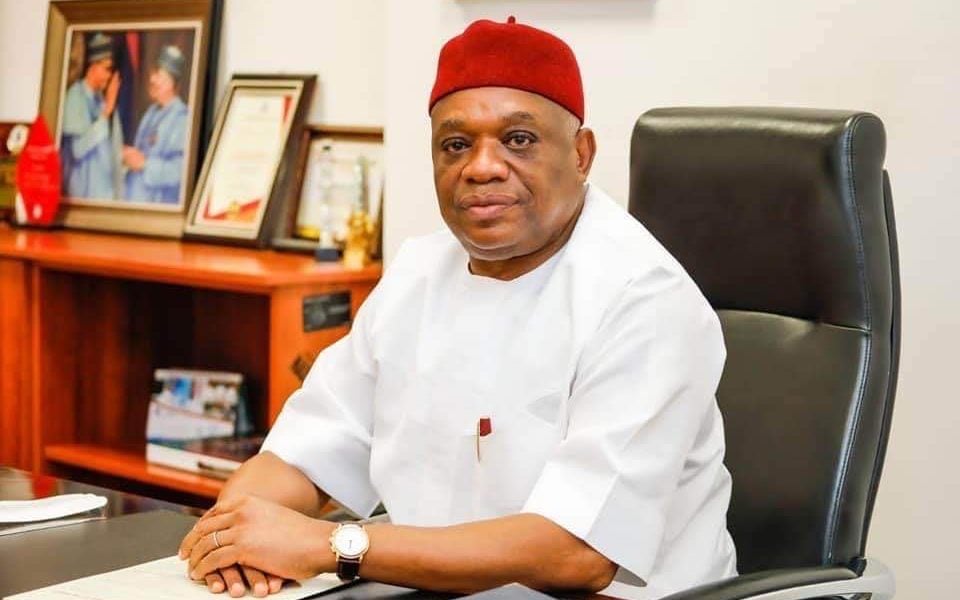
Senator Orji Uzor Kalu has weighed in on the growing political disagreement between FCT Minister Nyesom Wike and governors elected on the platform of the All Progressives Congress (APC), declaring that he would not tolerate the emergence or support of alternative candidates where the party has already produced its candidates.
The development comes amid increasing tension within the political establishment ahead of the 2027 general elections, particularly over Wike’s political activities and his support for President Bola Tinubu while remaining a member of the Peoples Democratic Party (PDP).
The APC Governors’ Forum recently declared that its members would not support political arrangements capable of weakening the party or undermining APC candidates in the 2027 elections. Imo State Governor and Chairman of the forum, Hope Uzodimma, said the governors’ campaign activities would focus on APC candidates at all levels.
Wike’s Position
Wike, who serves as Minister of the Federal Capital Territory, has continued to maintain his support for President Tinubu’s re-election bid.
However, his political activities have generated disagreements with some APC governors because the political coalition associated with him has provided an avenue for politicians seeking elective positions outside the APC structure.
During a recent media interaction, Wike specifically mentioned the governors of Imo and Kwara states, Hope Uzodimma and AbdulRahman AbdulRazaq, respectively, while discussing what he described as opposition to his political activities.
Wike has argued that supporting President Tinubu at the presidential level does not necessarily mean supporting every APC candidate contesting elections in individual states.
APC Governors Draw the Line
The APC Governors’ Forum has taken a different position, insisting that the party’s candidates must receive the support of its governors during the 2027 elections.
Uzodimma stated that the governors had resolved not to participate in or support political arrangements that could undermine President Tinubu’s re-election, weaken the APC or adversely affect the party’s candidates.
The position has effectively brought the governors and Wike into a public disagreement over the extent to which political alliances outside the APC should operate while supporting the President.
Kalu’s Intervention
Against this backdrop, Orji Uzor Kalu has expressed opposition to the idea of alternative candidates competing against candidates officially recognised by the party.
His position adds another dimension to the disagreement, particularly as political parties and their leading figures begin preparations for the 2027 elections.
The senator’s remarks are being viewed in the context of the broader debate over party loyalty, political alliances and whether politicians supporting President Tinubu should also support APC candidates contesting legislative and governorship positions in their respective states.
Political Tension Ahead of 2027
The disagreement has exposed competing political interests within the wider coalition supporting President Tinubu.
On one side, APC governors are seeking to protect their party structures and candidates ahead of the elections. On the other, Wike and members of his political network have continued to pursue a separate political strategy while maintaining support for Tinubu at the presidential level.
The disagreement has become particularly visible in states where politicians who lost APC primaries or have disagreements with sitting APC governors have sought alternative platforms.
Wike has defended his political activities, while APC leaders have insisted that party members and governors should concentrate their electoral support on officially nominated APC candidates.
With the 2027 elections approaching, the dispute is likely to remain an important issue within the governing political coalition as negotiations, candidate selection and campaign structures continue to develop.
For now, the central disagreement remains whether support for President Tinubu can coexist with support for candidates outside the APC, and how far political actors within the governing coalition can pursue independent electoral alliances without creating further conflict with the party’s established structures.