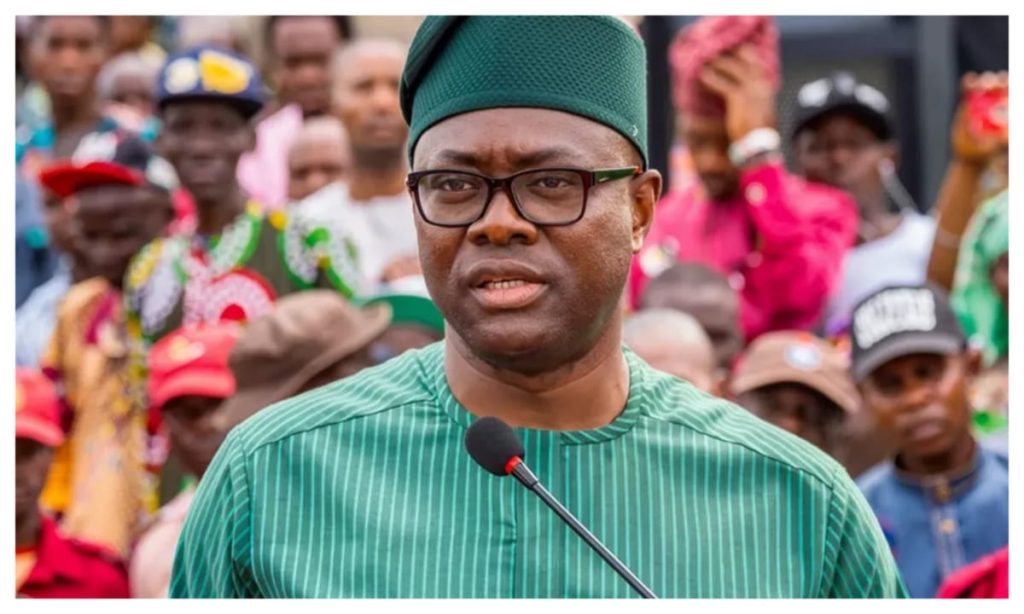
The presidential candidate of the Allied Peoples Movement (APM), Seyi Makinde, has revealed that his team was almost discouraged from taking its campaign message to the South-East because of the widespread perception that the region remains a stronghold of former Labour Party presidential candidate Peter Obi.
Makinde made the disclosure while addressing participants at the APM South-East town hall meeting in Enugu on Thursday, October 29, 2026, where he urged Nigerians to reject ethnic and religious divisions ahead of the 2027 general elections.
The Oyo State governor maintained that his political movement would not be intimidated by the belief that the South-East was firmly behind Obi. He insisted that his campaign had a responsibility to present its ideas and policies to Nigerians across all geopolitical zones, regardless of their existing political preferences.
Makinde: We Will Not Be Deterred by Peter Obi’s Popularity
Speaking at the gathering, Makinde explained that some people had advised his team against visiting the South-East because of the region’s strong political association with Peter Obi.
According to him, the perception that Obi enjoys overwhelming support across the region nearly discouraged his team from taking its message there.
However, Makinde said his campaign decided to proceed with its engagements, believing that voters deserved the opportunity to consider alternative political programmes before making their choices in 2027.
He said the campaign would continue to engage Nigerians directly rather than assume that any region belonged exclusively to a particular politician or political party.
Makinde’s position underscores the growing competition among presidential aspirants as political actors seek to expand their influence beyond their traditional support bases ahead of the next general election.
Why the South-East Matters in the 2027 Presidential Election
The South-East is expected to remain an important region in Nigeria’s 2027 presidential election, particularly because of the considerable support Peter Obi attracted there during the 2023 general election.
Obi, a former governor of Anambra State, emerged as a major political force during the 2023 presidential contest, attracting significant support from young people, professionals and voters seeking changes in governance.
His strong performance across the South-East established the region as a critical component of his political base.
Consequently, any presidential candidate seeking nationwide support must consider how to engage voters in the region and persuade them to evaluate competing political platforms.
For Makinde and the APM, the challenge will be to demonstrate that their political agenda offers practical solutions to Nigeria’s economic, security and social problems.
The governor’s decision to campaign in the region despite the perceived dominance of Obi also reflects the importance of grassroots engagement in a competitive presidential election.
Makinde Calls for an End to Ethnic and Religious Politics
Beyond the political competition, Makinde used the town hall meeting to urge Nigerians to reject political messages that divide citizens along ethnic and religious lines.
He argued that the problems confronting the country affect Nigerians regardless of their ethnic backgrounds, religious beliefs or geographical locations.
According to the APM presidential candidate, the country’s leadership should focus on creating opportunities, tackling poverty, reducing hunger and improving the living conditions of ordinary citizens.
He maintained that Nigeria’s challenges require collective solutions rather than political strategies that encourage divisions among different communities.
Makinde also stressed that the country’s future depends on the ability of political leaders to build trust with citizens and demonstrate sincerity in addressing their concerns.
His message appeared directed at voters across the South-East and the wider country, encouraging them to assess candidates based on their proposed policies and capacity to deliver results rather than ethnic or religious considerations.
APM Unveils Four Pillars of Its Reset Nigeria Agenda
During the meeting, Makinde outlined the broad objectives of his proposed Reset Nigeria Agenda, which he said would focus on four major areas.
These include resetting the economy, restructuring the country’s security architecture, reforming the education system and resetting the socio-political space.
The proposed agenda is intended to address some of the major challenges facing Nigeria, including unemployment, insecurity, poverty and limited economic opportunities.
Makinde explained that his campaign had been engaging Nigerians across the country’s six geopolitical zones to understand their concerns and incorporate their expectations into its policy proposals.
He said the consultations were designed to ensure that the party’s manifesto reflects the experiences and priorities of ordinary citizens.
The APM candidate also indicated that his campaign would finalise its manifesto following the consultations, with plans to unveil the document on November 4, 2026.
According to him, the proposed manifesto would outline the party’s plans for addressing the concerns raised during its engagements with Nigerians.
Makinde Questions Nigeria’s Economic Direction
The presidential hopeful also expressed concerns about the country’s economic situation, particularly the relationship between government revenue, borrowing and the availability of financing for businesses.
He questioned why the government continued to seek additional loans despite claims of substantial foreign reserves and improved tax revenue collections.
Makinde argued that Nigeria needed an economic structure capable of supporting productive enterprises, encouraging investment and creating sustainable employment.
He also identified access to long-term financing and high borrowing costs as major challenges confronting businesses, particularly those seeking to expand manufacturing and other productive activities.
According to him, a stronger economy would require policies that make it easier for entrepreneurs to establish and expand businesses, thereby creating employment opportunities for the country’s growing population.
He further emphasised the importance of entrepreneurship as a strategy for addressing youth unemployment, maintaining that businesses could play a significant role in generating sustainable jobs.
These economic proposals form part of the broader policy direction the APM candidate says he intends to pursue if elected president.
Can Makinde Challenge Peter Obi in the South-East?
Makinde’s remarks have brought renewed attention to the political calculations surrounding the South-East ahead of the 2027 elections.
Although Peter Obi secured substantial support in the region in 2023, the next election will present a new contest involving different political parties, campaign strategies and national issues.
For Makinde, entering the region represents an opportunity to introduce his agenda to voters who may be strongly associated with another political figure.
However, winning the attention of voters is different from securing their electoral support. The APM will need to demonstrate the appeal of its policies, build an effective grassroots organisation and persuade voters that its candidate can address their concerns.
Similarly, Obi’s political influence in the region will depend on his ability to maintain the confidence of his supporters and present a compelling vision for the country’s future.
The eventual outcome will also be influenced by factors such as party structures, candidate credibility, voter turnout, campaign alliances and the broader national political environment.
2027: The Battle for Voters Intensifies
As Nigeria moves closer to the 2027 general elections, presidential aspirants are increasingly seeking opportunities to communicate their policies and strengthen their support across the country.
Makinde’s comments demonstrate his determination to take the APM’s message to regions where other political figures enjoy considerable influence.
His appeal against ethnic and religious divisions also highlights a central question in the forthcoming election: whether voters will prioritise political identity, party loyalty, economic concerns or candidates’ proposed solutions to the country’s challenges.
Ultimately, the ability of presidential candidates to translate their campaign messages into public confidence and votes will determine their electoral prospects.
For Makinde, the immediate task is to convince Nigerians, including voters in Peter Obi’s traditional stronghold, that his Reset Nigeria Agenda offers a credible alternative.
Whether that strategy will significantly reshape the political landscape in the South-East remains to be seen as the 2027 election approaches.