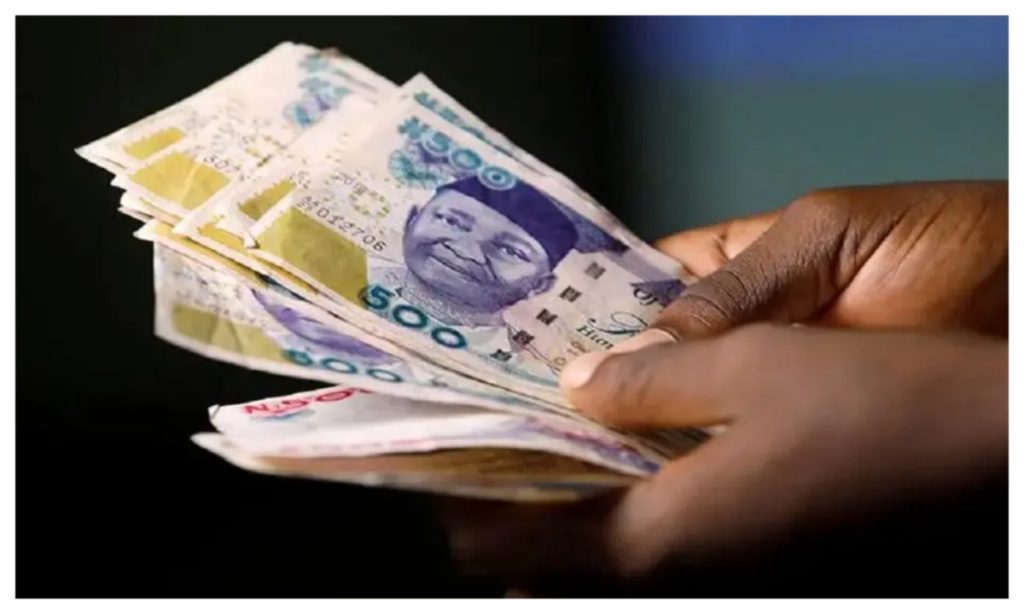
Nigeria’s economy is facing renewed concerns following the depreciation of the naira by ₦47.22 against the United States dollar within 17 days, alongside a $660 million decline in the country’s external reserves.
The development has raised questions among economists and financial experts about the stability of the foreign exchange market, the country’s ability to maintain adequate dollar supplies and the possible impact of political activities ahead of the 2027 general elections.
The naira depreciated to ₦1,394.01 per dollar on Monday, November 23, 2026, compared with ₦1,346.79 recorded on November 6. This represents a depreciation of approximately 3.51 per cent within the period.
At the same time, Nigeria’s external reserves declined from $55.24 billion on November 6 to $54.58 billion as of November 18, representing a reduction of $660 million, or approximately 1.19 per cent.
The simultaneous decline in the value of the naira and foreign reserves has intensified concerns about the country’s foreign exchange position as political activities gather momentum ahead of the next presidential election.
Economists Link Currency Pressure to Rising Political Activities
Some economists have identified increased demand for foreign exchange associated with political activities as one of the possible factors contributing to the recent pressure on the naira.
With political parties and presidential aspirants intensifying consultations, rallies and mobilisation activities across the country, concerns have emerged about the potential impact of election-related spending on the foreign exchange market.
Okechukwu Unegbu, economist and former President of the Chartered Institute of Bankers of Nigeria, suggested that political activities could be contributing to the growing demand for foreign currencies.
He observed that increased demand for dollars during the election period could place additional pressure on the naira and the country’s external reserves.
According to him, the timing of the currency depreciation and reserve decline raises questions about the influence of political spending on Nigeria’s foreign exchange market.
Professor Oyedokun Identifies Deeper Economic Problems
Financial expert and renowned accountant, Professor Godwin Oyedokun, offered a broader explanation of the challenges facing the naira.
He attributed the depreciation and declining external reserves to several underlying problems, including inadequate and inconsistent foreign exchange inflows, dependence on imports, speculative activities and investor uncertainty.
Oyedokun also highlighted the widening difference between the official and parallel market exchange rates as evidence of continuing challenges in accessing foreign currencies.
He cautioned against attributing the entire depreciation to election-related activities, explaining that although political uncertainty could influence market expectations, there was insufficient evidence to conclude that the 2027 campaigns were directly responsible for the currency’s recent decline.
He urged the government to move beyond managing dollar scarcity and focus on developing a sustainable dollar-earning economy.
Among the measures he recommended were strengthening non-oil exports, improving crude oil production, supporting domestic manufacturing and attracting productive foreign investment.
He also called on the Central Bank of Nigeria to improve foreign exchange market transparency, preserve adequate external reserves and strengthen dollar liquidity.
Foreign Exchange Demand Continues to Put Pressure on the Naira
The recent depreciation reflects the growing imbalance between foreign exchange demand and available dollar supply in Nigeria’s financial market.
Businesses require foreign currencies to import raw materials, machinery, petroleum-related products, industrial equipment and other essential goods.
Individuals and companies also need dollars for international payments, education, medical expenses, travel and other transactions.
When demand for foreign currencies exceeds available supply, the naira becomes vulnerable to depreciation.
Currency market operators have also expressed concerns about the increasing demand for dollars, particularly as political activities and seasonal spending intensify.
A Bureau de Change operator in Abuja’s Zone 4, Abubakar Bengazzir, attributed the pressure on the foreign exchange market partly to rising demand for foreign currencies.
The situation has placed additional responsibility on the Central Bank of Nigeria to maintain market stability and ensure adequate foreign exchange liquidity.
What the $660 Million Decline in Foreign Reserves Means
Nigeria’s external reserves are an important component of the country’s economic stability.
They provide the Central Bank with resources to support foreign exchange market interventions, meet international financial obligations and strengthen confidence in the country’s ability to manage external economic shocks.
A decline in reserves does not automatically indicate an economic crisis, particularly when reserves remain substantial. However, sustained reductions can limit the central bank’s flexibility if foreign exchange demand continues to exceed available supply.
The reduction from $55.24 billion to $54.58 billion within the reported period has therefore attracted attention from financial analysts.
Economists believe that maintaining adequate reserves will be important in supporting the naira and protecting the economy against external shocks.
Tinubu Administration Faces Economic Questions Ahead of 2027
The latest developments have placed additional attention on President Bola Ahmed Tinubu’s economic management as the country approaches another general election.
Since assuming office in May 2023, the Tinubu administration has introduced major economic reforms, including the removal of petrol subsidies and changes to the foreign exchange market.
The government has defended these reforms as necessary measures to address structural weaknesses, improve public finances and establish a more sustainable economic system.
However, Nigerians continue to face concerns over the cost of living, food prices, transportation expenses, business operating costs and the purchasing power of the naira.
The renewed pressure on the currency has consequently raised questions about the sustainability of the government’s economic recovery efforts.
Opposition politicians are also expected to make the economy a major issue in their campaigns, particularly regarding the performance of the naira, inflation, unemployment and the management of national resources.
CBN Under Pressure to Stabilise the Foreign Exchange Market
The Central Bank of Nigeria, under Governor Olayemi Cardoso, faces the challenge of maintaining exchange-rate stability while managing inflation and protecting the country’s external reserves.
Market analysts have warned that renewed pressure on the naira could make further monetary policy easing difficult.
The CBN must therefore balance the need to support economic growth with the importance of maintaining confidence in the local currency.
Improving foreign exchange liquidity, encouraging export earnings, attracting long-term investment and reducing speculative demand are among the measures experts consider important for stabilising the market.
What Nigerians Should Expect
The coming months will be important for Nigeria’s economic outlook as political activities, festive-season spending and foreign exchange demand continue to influence market conditions.
If dollar demand continues to rise without corresponding improvements in foreign exchange inflows, the naira could face further pressure.
However, stronger crude oil production, increased non-oil exports, improved investor confidence and consistent foreign exchange policies could help strengthen the country’s external position.
The government and the Central Bank will therefore need to demonstrate that economic reforms are producing sustainable results rather than temporary improvements.
Conclusion
The depreciation of the naira by ₦47.22 and the $660 million reduction in external reserves have renewed concerns about Nigeria’s economic stability ahead of the 2027 general elections.
While economists have identified political spending as one possible source of pressure, they have also emphasised deeper structural problems affecting foreign exchange supply, investor confidence and the country’s ability to generate dollars.
For millions of Nigerians, the major concern is how these developments will affect food prices, transportation, business operations, employment and the overall cost of living.
As the 2027 elections approach, Nigerians will be watching closely to see whether the Tinubu administration can stabilise the naira, strengthen foreign reserves and deliver meaningful economic improvements.