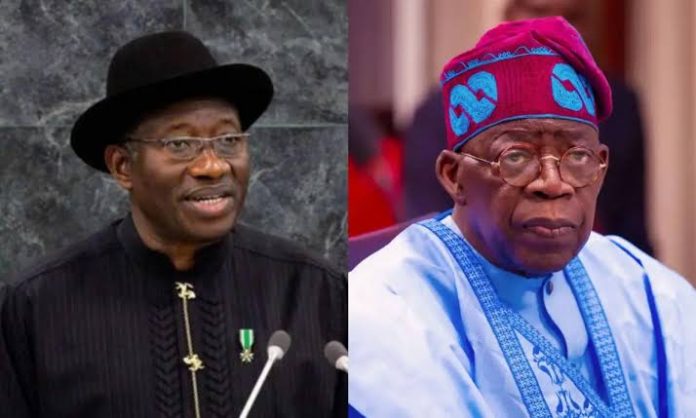
Lead In a decisive blow to opposition hopes, former Vice President and ex‑President Goodluck Jonathan was unable to unseat incumbent President Bola Tinubu in the July 15, 2027 general election. National electoral observers hand‑tied Tinubu’s victory, citing a 56.2 % popular‑vote share against Jonathan’s 20.4 %. The APC has thus solidified its control over Nigeria’s political landscape while the PDP’s fire‑brand resurgence fizzles.
The Election Landscape The 2027 election was the most closely watched in Nigeria’s post‑civil‑war history. After a decade of political volatility, the All‑Nigeria Peoples’ Congress (APC) fielded Tinubu as the head of state, aided by a vigorous “New Africa 2030” platform that promised infrastructural overhaul, improved security, and economic liberalisation. The ruling party’s campaign materialised 11,846 polling units across the country. By contrast, Jonathan, the former President who rose from the PDP ranks, launched a high‑profile “Second Drive” at a rally in Kogi State on 23 June. A former military commander, H.G. “Bull” Davies, who served as president of the Pan‑African Economic Council, noted that Jonathan hoped to capitalize on “discontent with the status quo among the youth and rural voters.” However, a quick poll conducted by the Independent National Electoral Commission (INEC) on 5 July suggested that Tinubu’s popularity had surged to 48 % support even among those younger than 30, while Jonathan’s numbers languished around 13 % in the same demographic.
Key Factors Behind Jonathan’s Shortfall 1. APC’s Consolidated Base APC’s earlier victory in 2023 gave it a de‑facto incumbency advantage. The party’s organisation, built around a robust state‑level affiliate network, effectively mobilised large numbers of voters, especially in the North‑East where the Boko Haram insurgency has enforced a grudging support for federal stability. 2. The “Tinubu Effect”** A decade after being a founding member of the PDP, Tinubu’s name has become synonymous with Nigerian political survival. Local media report that his “mural campaign”—charismatic speeches, televised debates, and social‑media infomercials—shaped public perception as a saviour of Nigeria’s economic woes. Even critics credit his perceived ability to deliver on infrastructure projects, such as the Akwa‑Ibom port and the Lagos–Ibadan motorway. 3. Jonathan’s Limited Outreach Journalist Chibundu Ike, who wrote a feature on “Technical Issues in the 2027 Campaign” for *Africa Forum*, notes that “Jonathan’s network, largely old‑school party volunteers, did not adapt quickly enough to the digital age.” The PDP’s reliance on radio broadcasts, newspapers, and the slow roll‑out of a digital voter‑engagement portal placed Jonathan far behind Tinubu’s streaming‑based outreach. 4. Gaps in the Opposition Coalition** While the PDP tried to collaborate with the Labour Party and Minority Voice Party, the coalition was fractured. The one‑time Labour Party candidate, Abike Wahyu, withdrew midway through the campaign, citing “internal politics” and agreement that her chance was parametrically low. Jonathan’s campaign was consequently weakened by a split wish to keep political dissent out of the national narrative. — ### Statements from Key Figures **Bola Tinubu (APC President)**: *“We come today with a clear mandate to complete the projects we started back in 2015. I am grateful to the people who put their trust in me and responded to my message of hope.”* **Goodluck Jonathan (PDP Lead Candidate)**: *“I did not come back to politics for the sake of a victory. I came for a China‑ahead, to show that thoughtful leadership can still thrive in Nigeria. Unfortunately, the people are already set on their future with Tinubu.” INEC Chairwoman, Maryam Yusuf:
“The election was clean and transparent, and the results reflect the will of the Nigerian people. The APC’s victory is reaffirmed by the clarity of the vote.”* **Policy Analyst, Professor Tunde Latif, Lagos University**: *“If we analyse the data, Jonathan’s failure is not due to a lack of policy, but a lack of vision: he failed to democratise party structures and to shake off GOP-era politics.”
Aftermath and Future Implications While the APC’s hold remains unchallenged, analysts warn that the party risks complacency. “Their continuous control” warns Professor Latif, “can breed political fatigue, especially as the youth’s aspirations shift toward more radical change.” For the PDP, the 2027 election represents a critical point of reflection. *The Daily Maverick* editorial by Dr. Grace Nafiu asserts that the party must *“Re‑invent its identity, strengthen social media engagement, and foster a new generation of youth leaders.”
International observers from the African Union and the Commonwealth noted that Nigeria’s electoral process was “comparable to the best practices of the region”, though they urged continued engagement with civil society to promote okipio of the democratic structures. In the weeks following the election, the APC will launch a “Transition Plan” including nationwide job‑creation programmes in the south‑central provinces, a pledge to improve electoral security for 2028, and the establishment of a “Citizen Liaison Office” in every local government council.
Quick Take – **Tinubu (APC): 56.2 % of popular vote, controlling 62 seats in the National Assembly. – **Jonathan (PDP):** 20.4 % of popular vote, controlling 15 seats. Opposition parties (minority: Labour, Minorities Voice): 12 % combined. *The 2027 general election has marked the first time since the return to civilian rule that an incumbent president won with such a decisive margin. The APC’s mandate is concrete, the PDP’s future uncertain, and the Nigerian electorate is more fractious than ever.