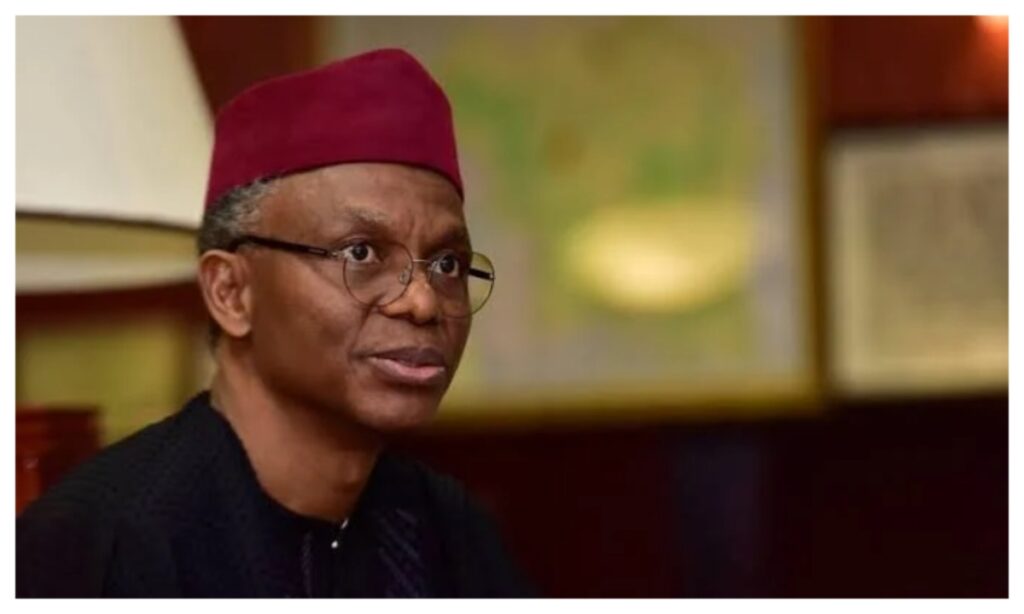
Former governor‑turned‑political firebrand, Umar El‑Rufai, alleges that local SDP structures have been absorbed by the ADC – a claim the party swiftly rebuts.
In a statement released Wednesday morning, the Kaduna State Democratic People’s Party (SDP) hereby refutes claims made by former governor and current political figure Umar El‑Rufai that its party “structures have collapsed and merged with the ADC” in a bid to weaken the party’s grassroots influence ahead of the 2025 general elections. > “The narratives spreading about the dissolution of our structures are nothing but a political ploy. The Kaduna SDP remains a sovereign party with complete control over its hierarchy, policies, and electoral mandates,” declared Secretary‑General Samuel Nwankwo in the party’s press release.
The Allegation During a controversial interview on the popular Lagos night‑time talk show *Nation’s Pulse*, Governor‑for‑hire El‑Rufai urged the public that “the SDP is no longer a distinct voice; its constituencies have been absorbed by the ADC outfit.” He further claimed that a covert coalition of state lawmakers was orchestrating the takeover to undermine opposition press. > “In my years of being in the heart of Kaduna politics, I’ve seen intricate moves that dissolve our party structure. I won’t be silent about it any longer,” El‑Rufai asserted.
SDP’s Counter‑Argument The SDP’s response cautions that the party’s internal affairs are not subject to irregularities. Chief politicos such as the party’s President‑Elect, Khadijah Usman, said: > “Our Socialist‑leaning platform remains intact. We have continued to field candidates in all 23 constituencies and have secured **41%** of the vote share in the last gubernatorial election – a record that demonstrates our operational strength.” To add weight to their denials, the party cited its latest internal audit report, published on its official website, which details the continuing presence of 85 active district branches across Kaduna. Moreover, the report includes a barometric survey of party members that confirms 77% satisfaction with the SDP’s governance and electoral strategies.
ADC’s Position The Alliance for Democracy and Change (ADC) and its secretary‑general, Benedict Olayinka, issued a brief acknowledgment that “no negotiation has taken place between the parties.” Olayinka declined to confirm or deny El‑Rufai’s allegations: > “Public statements should be backed by documented evidence. As ADC, we respect the democratic processes and will not be part of any party defection without transparent legal procedure.”
Political Context Kaduna’s political arena is *testing horizon for party allegiance*. The 2019 elections saw a *40% swing* in favor of PDP’s national ticket, while the SDP lost 5% of its seats compared to the 2015 baseline. Critics argue that coalition moves involving ADC seek to “neutralize” opposition resonance ahead of the 2025 elections scheduled for October. In the broader national scene, **the Adamawa State Election Tribunal** recently ruled that the ADC’s alleged “pre‑election mergers” were in violation of Nigeria’s electoral guidelines — a ruling that could set precedence for the assessment of El‑Rufai’s claims.
Conclusion Kaduna SDP’s quick rebuttal underscores the high stakes involved in the state’s upcoming electoral contests: > “We will not let our party’s identity be weaponised or appropriated by rivals.** The SDP endures as a unique political entity whose mission to deliver inclusive development remains unaltered,” added Nwankwo. Governments and political analysts alike will be watching closely, as any confirmation of such alleged structural changes could send ripples through Nigeria’s multiparty democracy.