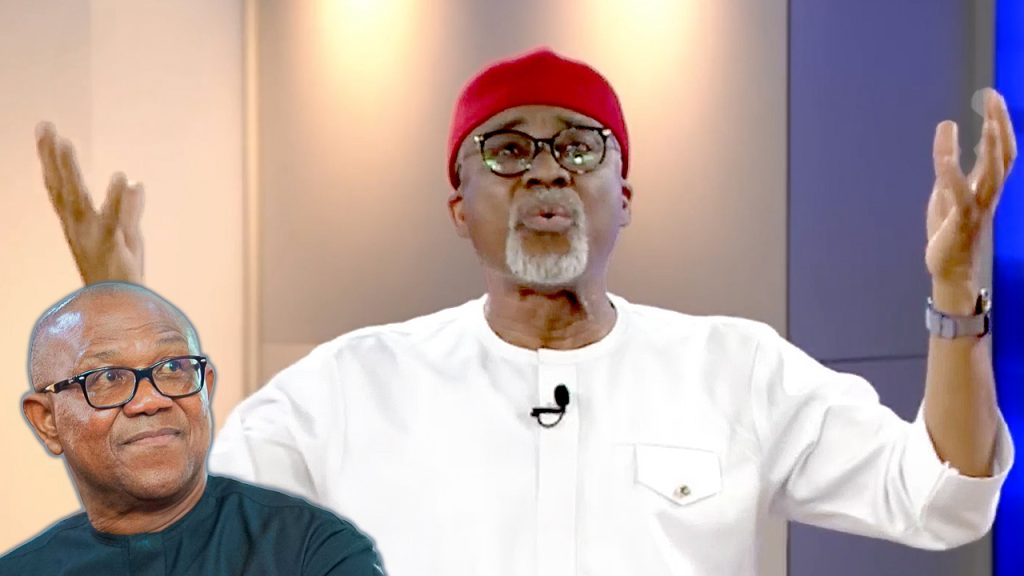
Senator Enyinnaya Abaribe has openly expressed his opinion that former Anambra State Governor Peter Obi would offer better national leadership than President Bola Ahmed Tinubu, sparking renewed debate over governance style, accountability, and Nigeria’s political direction.
Speaking during a public engagement, Abaribe criticized what he described as an overly centralized approach to governance under the current administration. He referred to the leadership style as one that concentrates power within a narrow circle, arguing that such an approach weakens democratic institutions and limits transparency in decision-making.
According to Abaribe, Nigeria requires leadership that emphasizes prudence, inclusion, and measurable outcomes. He praised Peter Obi’s record in public service, particularly his emphasis on fiscal discipline, reduced government waste, and investment in human capital. The senator stated that Obi’s leadership philosophy prioritizes service delivery over political patronage.
Abaribe further argued that the country’s current economic and security challenges demand a leader who understands the struggles of ordinary citizens and manages public resources with restraint. He said Obi’s governance approach reflects these values and would be better suited to addressing unemployment, rising living costs, and declining public trust in government.
Reacting to the remarks, supporters of the ruling party dismissed Abaribe’s comments as politically motivated, insisting that President Tinubu’s administration is focused on long-term reforms designed to stabilize the economy and reposition the country for growth. They maintained that difficult policy decisions are necessary to address deep-rooted structural problems.
Despite the differing opinions, Abaribe maintained that constructive criticism is essential in a democracy. He urged Nigerians to assess leaders based on competence, integrity, and track records rather than party loyalty or rhetoric.
The comments have since generated widespread discussion across political circles, with analysts noting that such contrasting views underscore the growing public interest in leadership quality, governance accountability, and the future direction of the country.
As political conversations continue to intensify, Abaribe’s remarks have added momentum to broader national debates about what kind of leadership Nigeria needs to overcome its present challenges and secure a more stable and prosperous future.