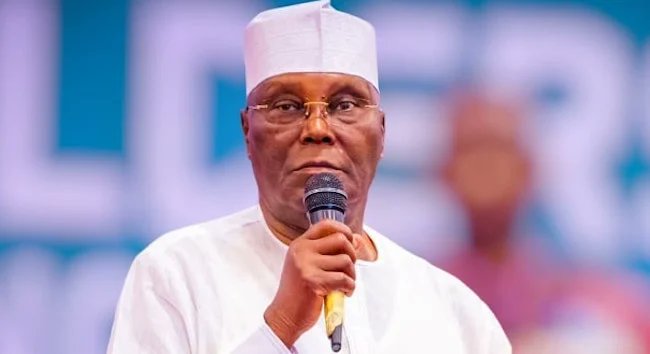
Former Vice President Atiku Abubakar has criticized the Federal Government over Nigeria’s rising debt profile, accusing the current administration of relying heavily on borrowing while millions of Nigerians continue to struggle with worsening economic hardship.
Speaking during a political engagement, Atiku expressed concern over the country’s growing financial obligations, warning that excessive borrowing without visible improvement in the living conditions of citizens could place the nation under severe economic pressure in the future.
According to him, many Nigerians are battling inflation, unemployment, insecurity, and the high cost of living, yet government officials continue to celebrate fresh loans and economic policies that have not translated into immediate relief for ordinary citizens.
The former presidential candidate argued that borrowing should be tied directly to productive investments capable of stimulating economic growth, creating jobs, and improving infrastructure. He maintained that many citizens are yet to feel the impact of the administration’s economic reforms despite repeated assurances from government officials.
Atiku further stated that fear and uncertainty have continued to grow among citizens due to rising food prices, transportation costs, and the declining purchasing power of households across the country. He claimed that small businesses are under pressure while many families are finding it increasingly difficult to meet basic needs.
He called on the government to focus more on policies that would encourage local production, support entrepreneurs, stabilize the economy, and reduce dependence on loans. According to him, sustainable economic growth can only be achieved through responsible fiscal management and strategic investment in critical sectors.
However, supporters of the administration have defended the government’s borrowing strategy, insisting that many of the loans are targeted at infrastructure development, economic expansion, and long-term national growth. They argue that difficult economic decisions were necessary to address longstanding structural problems affecting the country.
The debate over Nigeria’s debt burden has remained a major issue in the nation’s political and economic discussions, with experts offering differing opinions on the sustainability of the country’s borrowing pattern and the impact on future generations.
As political activities ahead of the 2027 general elections gradually intensify, economic management and the welfare of citizens are expected to remain central topics in national debates among political leaders and stakeholders.
Atiku has raised important concerns that many Nigerians can relate to. The rising cost of living and increasing debt burden are serious issues that deserve open discussion and responsible solutions. Leaders must focus on policies that truly improve the lives of citizens, support businesses, and create lasting economic growth for the future.