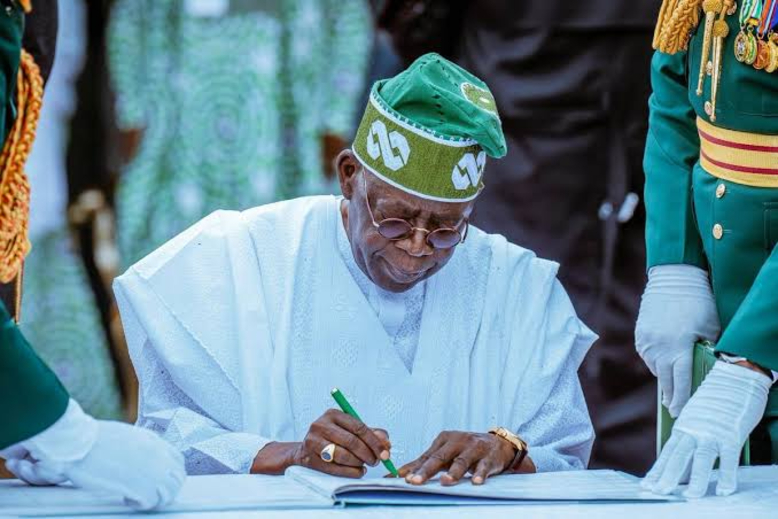
President Bola Tinubu has defended his administration’s economic policies as he marked three years in office, insisting that difficult decisions such as the removal of fuel subsidy and the devaluation of the naira were necessary to stabilize Nigeria’s economy and secure the nation’s future.
In a nationwide address commemorating his third anniversary in office, Tinubu said his government inherited serious economic challenges that required urgent and bold reforms. According to him, the continued payment of fuel subsidy had become unsustainable and was draining public resources that could have been invested in critical sectors such as infrastructure, healthcare, education, and security.
The President maintained that ending the subsidy regime was one of the toughest decisions his administration had to make, but argued that it was necessary to prevent economic collapse. He stated that the policy had helped reduce pressure on government finances while allowing more funds to be allocated to development projects across the country.
Tinubu also defended the floating of the naira and other monetary reforms introduced under his administration. He explained that multiple exchange rates and heavy market interventions had weakened investor confidence and distorted the economy for years. According to him, allowing the naira to trade more freely was aimed at creating transparency, attracting foreign investment, and restoring confidence in Nigeria’s financial system.
While acknowledging the hardship faced by many Nigerians as a result of rising inflation and increased living costs, the President said his administration has introduced measures to cushion the effects of the reforms. He highlighted ongoing interventions in agriculture, transportation, student loans, wage support, and small business financing as part of efforts to support vulnerable citizens.
Tinubu further claimed that signs of economic recovery are beginning to emerge, citing improvements in government revenue, increased investments, and renewed interest from international partners. He assured Nigerians that the sacrifices being made today would eventually lead to long-term economic growth and national prosperity.
The President called for patience and continued support from citizens, emphasizing that meaningful reforms often come with temporary difficulties. He reiterated his administration’s commitment to strengthening security, improving infrastructure, creating jobs, and building a more stable economy.
Political stakeholders and economic observers have continued to express mixed reactions to the administration’s policies. While supporters argue that the reforms were overdue and necessary, critics insist that more should have been done to reduce the burden on ordinary Nigerians struggling with inflation and high fuel prices.
Despite the debates surrounding the policies, Tinubu insisted that his government remains focused on implementing reforms that would reposition Nigeria for sustainable development and economic stability.
https://shorturl.fm/wskFm
https://shorturl.fm/ul9qa
https://shorturl.fm/ovFZw