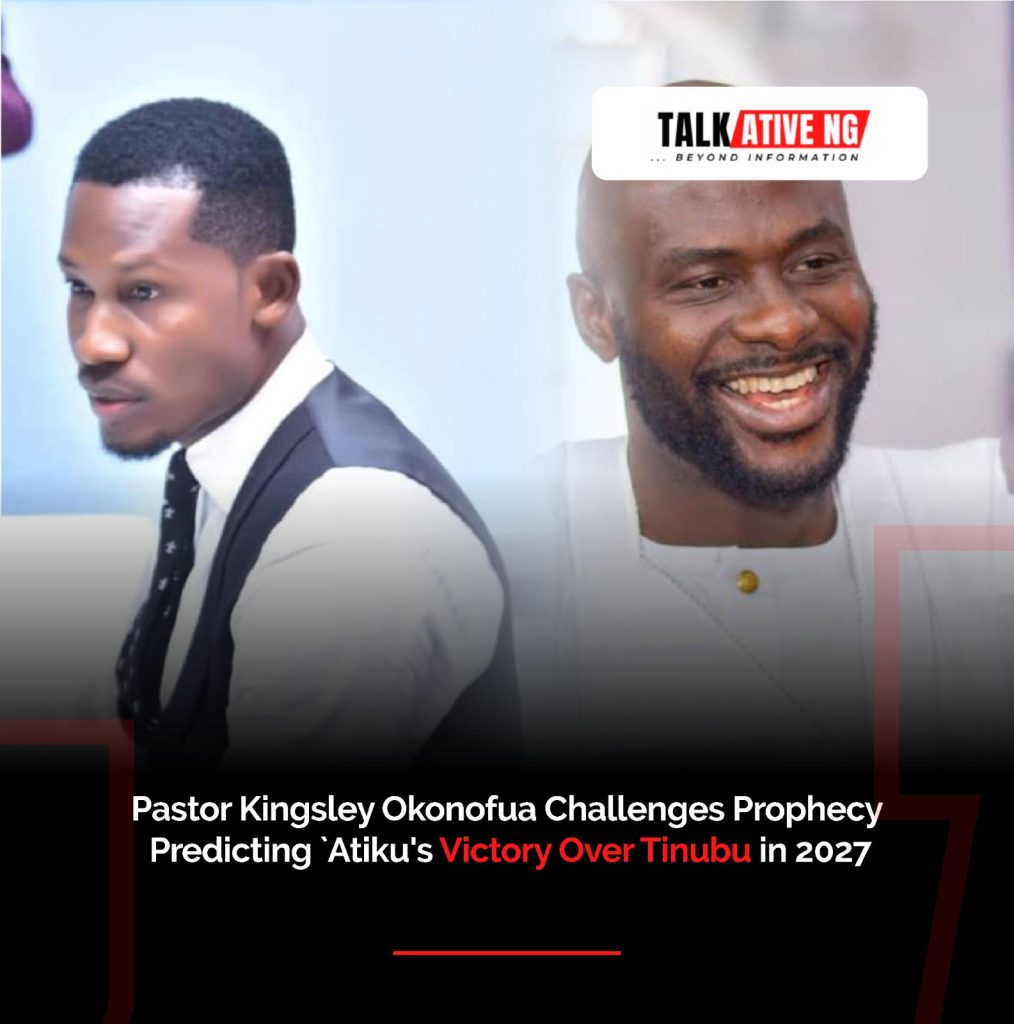
Pastor Kingsley Okonofua has openly questioned a prophecy forecasting that former Vice President Atiku Abubakar will emerge victorious over President Bola Ahmed Tinubu in Nigeria’s 2027 presidential election, saying the prediction should not be treated as a certainty.
Speaking during a recent address on national leadership and the future of the country, Pastor Okonofua emphasized that electoral outcomes are determined by a combination of factors, including governance performance, public opinion, political strategy, and the decisions of voters at the ballot box.
According to the cleric, while prophetic messages often generate public interest and political debate, it is important for citizens to exercise wisdom and avoid drawing premature conclusions about events that are still years away.
He argued that Nigeria’s political environment remains highly dynamic and that numerous developments could reshape the electoral landscape before the next general election. He noted that economic conditions, security challenges, political alliances, policy outcomes, and voter expectations will all play significant roles in determining who ultimately secures victory in 2027.
Pastor Okonofua maintained that no political figure should be considered unbeatable, just as no election result should be regarded as predetermined. He stressed that democracy gives citizens the power to decide their leaders through a transparent electoral process.
The cleric further called on Nigerians to focus more on evaluating the performance of elected officials and the quality of policies being implemented rather than becoming consumed by political forecasts and predictions.
He urged political leaders across party lines to prioritize governance, national unity, economic growth, and security, stating that these issues are of greater importance to ordinary Nigerians than early election calculations.
Pastor Okonofua also encouraged religious leaders to continue praying for the nation and promoting peace, while avoiding statements that could create unnecessary tension among political supporters. He emphasized the need for responsible public discourse, particularly as conversations surrounding the 2027 elections gradually begin to gain momentum.
The comments have sparked discussions among political observers and members of the public, with many highlighting the ongoing intersection between religion and politics in Nigeria. Some believe prophetic declarations can influence public perception, while others argue that electoral outcomes should be judged primarily on political realities and voter choices.
As political activities continue to evolve ahead of the next election cycle, analysts expect debates over leadership, governance, and potential candidates to remain a major part of the national conversation.
Pastor Okonofua concluded by urging Nigerians to remain focused on the country’s development and democratic progress, expressing confidence that the electorate will ultimately make decisions based on their assessment of the candidates and the future direction they desire for the nation. :::