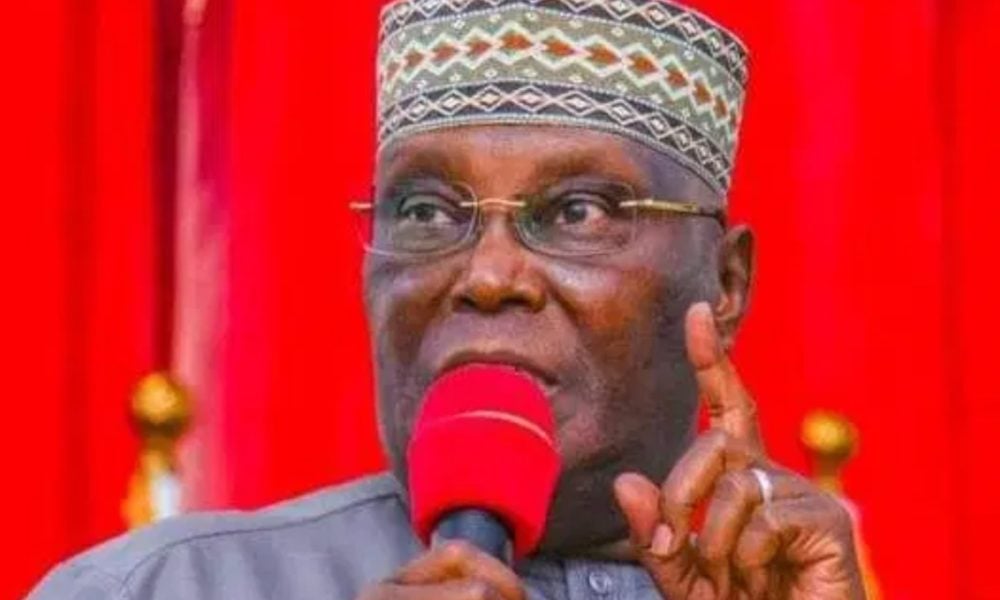
Former Vice President Atiku Abubakar has claimed that United States President Donald Trump supports his proposal to reconsider Nigeria’s fuel subsidy policy, as he continues to advocate measures aimed at reducing the economic pressure facing Nigerian households.
Atiku’s position centres on the argument that government policy on petrol pricing should take into account the welfare of ordinary Nigerians, particularly households and businesses affected by rising transportation, food and operating costs.
According to Atiku, restoring some form of fuel subsidy could provide immediate relief by reducing the amount consumers pay for petrol and, consequently, lowering transportation and logistics costs across the economy.
He has maintained that any subsidy arrangement should be carefully structured to prevent corruption, waste and abuse. Rather than returning to an opaque system in which government expenditure on fuel subsidies is difficult to monitor, Atiku’s position calls for greater transparency, accountability and effective management of public resources.
The former vice president also argues that the removal of the subsidy placed substantial pressure on Nigerians because petrol prices increased significantly after the policy change. Higher fuel costs have had wider consequences for transportation, food distribution, manufacturing and other sectors that depend directly or indirectly on petroleum products.
Atiku’s reference to Trump introduces an international dimension to the debate. However, the nature and extent of the alleged support would need to be clearly established, including whether Trump has formally endorsed Atiku’s specific proposal or merely expressed views that Atiku considers consistent with his position.
The subsidy debate remains one of the most consequential economic policy issues in Nigeria. Supporters of subsidy removal argue that government resources previously committed to keeping petrol prices artificially low can instead be directed toward infrastructure, healthcare, education and other productive investments.
Those advocating a return to subsidy arrangements, however, contend that removing the policy without sufficient social protection exposes Nigerians to severe economic hardship and contributes to inflationary pressures.
A possible middle ground could involve a targeted intervention rather than a broad fuel subsidy. Under such an approach, government could provide temporary assistance to vulnerable households and critical economic sectors while implementing stronger mechanisms to prevent diversion of public funds.
Atiku’s latest position therefore places fuel pricing and economic relief at the centre of the broader political debate over how Nigeria should manage the consequences of energy-price reforms.
The claim that Trump supports the proposal, if formally substantiated, could add political weight to Atiku’s argument. However, the specific nature of Trump’s alleged backing remains an important issue that requires clarification before the claim can be treated as an established endorsement.
For Atiku, the central argument is that economic reforms must ultimately improve the living conditions of Nigerians. His call for a review of the fuel subsidy policy reflects his broader position that government should balance fiscal reforms with measures capable of protecting citizens from severe economic hardship.