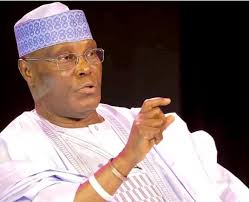
Former Vice President and presidential candidate of the African Democratic Congress (ADC), Atiku Abubakar, has raised concerns over a ₦6.44 billion allocation contained in the 2026 federal budget for activities linked to Nigeria’s participation in the 2026 FIFA World Cup qualifiers.
According to Atiku, the budgetary provision has generated serious questions because Nigeria’s qualification campaign had already suffered a major setback before the 2026 budget proposal was finalized, making the allocation difficult to justify in its stated form. He called on relevant authorities to explain the purpose of the expenditure, the agency responsible for proposing it, and the intended beneficiaries of the funds.
The former Vice President described the allocation as an issue that goes beyond ordinary budgeting errors, arguing that it raises broader concerns about transparency, accountability, and the integrity of Nigeria’s budgetary process. He stated that public funds must be tied to clearly defined objectives that can withstand public scrutiny and deliver measurable value to citizens.
Atiku further questioned whether adequate oversight mechanisms were applied during the preparation and approval of the budget, insisting that Nigerians deserve explanations regarding any expenditure that appears inconsistent with national priorities or existing realities. He urged relevant institutions to conduct a thorough review of the allocation to determine whether it was appropriately captured and justified within the appropriation framework.
The development has added to ongoing conversations surrounding fiscal discipline, public sector accountability, and transparency in government spending. Analysts believe the controversy may intensify calls for stronger scrutiny of budget proposals and stricter monitoring of how public resources are allocated and utilized across government agencies and special intervention programmes.
As of the time of reporting, government officials had not publicly responded to the concerns raised regarding the ₦6.44 billion budget provision, leaving many Nigerians awaiting clarification on the matter and the intended use of the funds.