The Peoples Democratic Party (PDP) has maintained that no individual politician, regardless of political influence or position, has the power to eliminate an opposition political party from Nigeria’s democratic space.
The position comes amid renewed political disagreements involving the PDP, the ruling All Progressives Congress (APC), and prominent political figures ahead of the 2027 general elections.
The PDP’s position reflects the party’s argument that political parties are sustained not only by individual leaders but also by their structures, members, supporters and participation in Nigeria’s electoral process.
PDP Defends Its Position as Opposition Party
The PDP has continued to describe itself as an opposition platform and has rejected suggestions that it has entered into an alliance with the ruling APC.
In a statement attributed to the party’s Interim National Working Committee, National Publicity Secretary Ini Ememobong reaffirmed the PDP’s opposition status and said the party remained committed to political competition and democratic consolidation.
The party has also been involved in internal disagreements over its leadership, candidates and political direction, developments that have produced competing positions from different factions.
Despite these challenges, the party has continued to participate in political activities and preparations ahead of the 2027 elections.
Umahi’s Role in the Political Debate
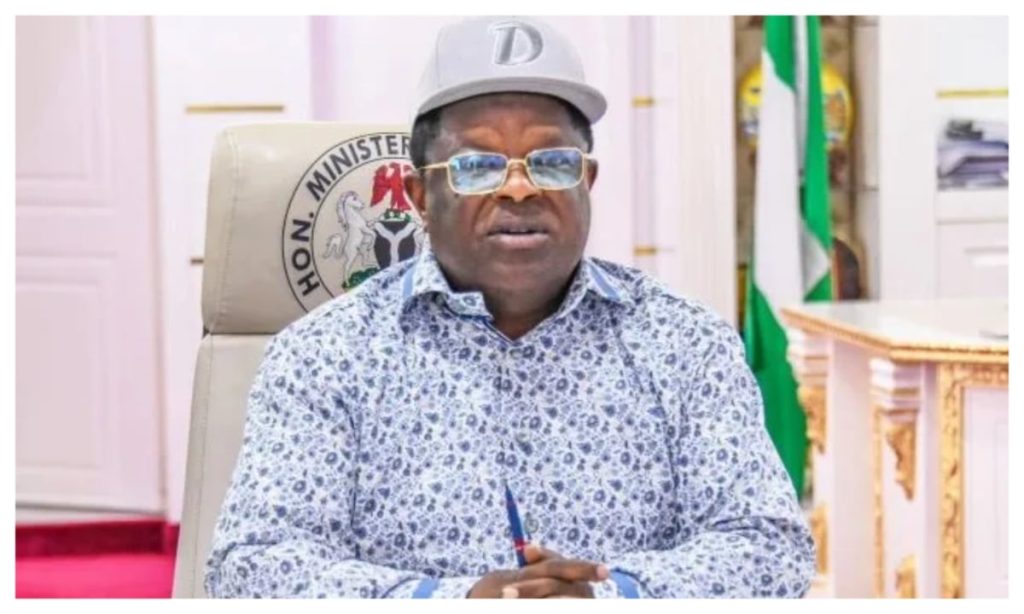
Works Minister David Umahi, a former governor of Ebonyi State and former member of the PDP, has become an active voice in the political debate surrounding the South-East and the 2027 presidential contest.
Umahi left the PDP and joined the APC during his political career and has subsequently defended the administration of President Bola Ahmed Tinubu.
In June 2026, Umahi argued that political leadership should be based on truth, accountability and a verifiable record of service. He made the comments while inspecting the Lagos-Calabar Coastal Superhighway in Epe, Lagos State.
The minister also criticised what he described as attempts to gain political power through deception, in comments that were interpreted as being directed at political opponents.
PDP and the Question of Opposition Politics
The latest disagreement comes against the backdrop of heightened political activity ahead of the 2027 elections.
The PDP has faced internal disputes involving different factions and competing political interests. In Ebonyi State, for example, different groups associated with the party have taken opposing positions over the state’s political leadership and the role of external political actors.
One faction of the PDP has accused FCT Minister Nyesom Wike of political interference in Ebonyi affairs, while another political bloc has taken different positions on the matter.
These disagreements illustrate the wider political contest within opposition parties as politicians position themselves for the next electoral cycle.
Opposition Parties Remain Part of Nigeria’s Democratic System
Nigeria operates a multiparty political system in which registered political parties compete for elective positions at federal and state levels.
Consequently, the survival of an opposition party depends on a combination of factors, including its organisational structures, membership, funding, leadership, candidates, electoral performance and ability to maintain support among voters.
Political changes, defections and internal disputes can significantly alter the strength of individual parties, but they do not by themselves remove the constitutional framework that permits political parties to operate and contest elections.
2027 Politics Intensifies
The debate is unfolding as Nigerian political parties intensify preparations for the 2027 general elections.
President Tinubu’s administration has continued to attract support from politicians who have defected from opposition parties, while opposition groups are seeking to strengthen their structures and develop strategies for the next elections.
Umahi has also recently spoken about the South-East’s political future and the question of presidential succession, further highlighting the growing political competition ahead of 2027.
For the PDP, the challenge is therefore not simply the influence of individual politicians but also its ability to manage internal disagreements, maintain party structures and present candidates capable of competing effectively across the country.
The party’s latest position underscores its insistence that Nigeria’s democratic system requires viable opposition parties and that political competition should remain an integral part of the electoral process.