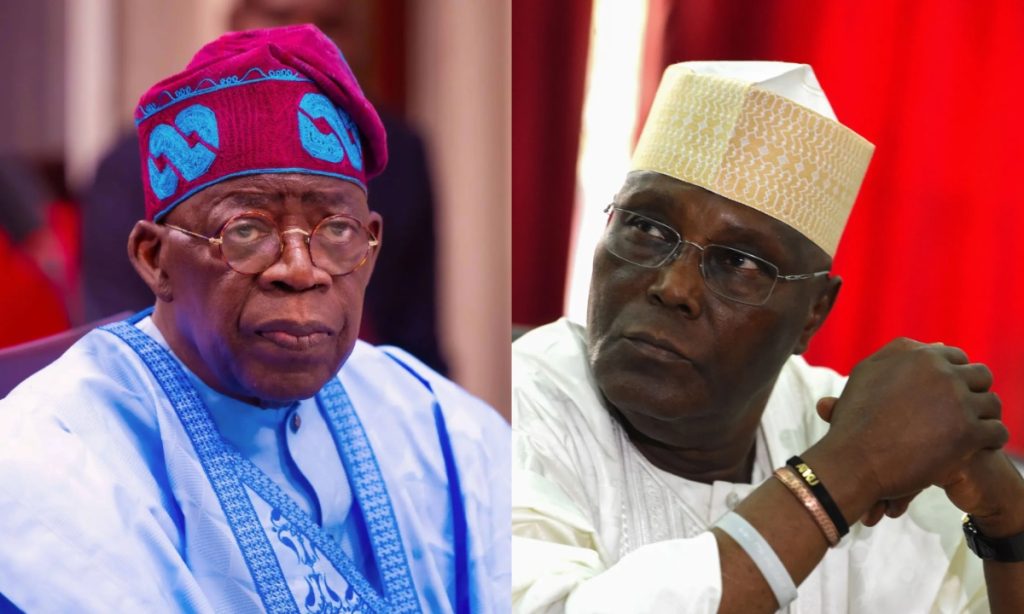
2027 Presidency: ADC Challenges Tinubu to Face Atiku at the Polls, Rejects Legal Maneuvers
The African Democratic Congress (ADC) has challenged President Bola Ahmed Tinubu to face former Vice President Atiku Abubakar in the 2027 presidential election, insisting that Nigerians should be allowed to determine the country’s next leader through a free, fair, and credible electoral process.
The opposition party has strongly rejected the recent Federal High Court judgment affecting its national leadership and the process that produced Atiku as its presidential candidate, describing the development as a threat to opposition politics and democratic competition in Nigeria.
The controversy has intensified following the November 5, 2026, judgment delivered by Justice Peter Lifu of the Federal High Court in Abuja, which nullified the leadership structure headed by former Senate President David Mark and invalidated decisions taken under that leadership, including the process that produced Atiku as the ADC’s presidential candidate.
ADC Rejects Court Judgment
In its reaction, the ADC expressed strong reservations about the court’s decision, arguing that the judgment raised important legal questions, particularly in view of an earlier ruling delivered by another Federal High Court judge concerning the party’s leadership.
The party maintained that the earlier judgment had recognised the David Mark-led leadership and questioned how a court of coordinate jurisdiction could subsequently issue a decision affecting that leadership.
The ADC also questioned the timing of the judgment, which came shortly after its political mobilisation activities in Sokoto State.
The party insisted that it would not surrender its political ambitions or abandon its commitment to participating in the 2027 general elections.
Atiku Sends Strong Message to Tinubu
Former Vice President Atiku Abubakar has also responded strongly to the development, insisting that no court decision, political pressure, or intimidation would force him to abandon his presidential ambition.
Atiku challenged President Tinubu to present his administration’s record to Nigerians rather than allow political and legal controversies to determine the outcome of the next election.
He maintained that the ultimate decision concerning Nigeria’s leadership should belong to voters through the ballot box.
The former vice president also criticised the administration over economic challenges, including rising food prices, the depreciation of the naira, increasing living costs, and difficulties confronting businesses and ordinary Nigerians.
Atiku argued that Nigerians deserved an opportunity to freely choose their next president without unnecessary political interference.
ADC Vows to Challenge the Judgment
Following the court’s decision, the ADC announced its intention to pursue every available legal option to challenge the ruling.
The party subsequently filed an appeal and sought a stay of execution, while also notifying the Independent National Electoral Commission (INEC) of its legal actions.
The party urged INEC to exercise caution and avoid taking steps that could pre-empt the outcome of the pending appeal.
The ADC maintained that the dispute should not be viewed merely as a disagreement over party leadership or Atiku’s presidential ambition but as a broader question concerning the democratic rights of political parties, candidates, and Nigerian voters.
Concerns Over Nigeria’s Multiparty Democracy
The controversy has raised fresh questions about the future of opposition politics in Nigeria ahead of the 2027 general elections.
The ADC has warned against developments that could weaken political competition or create an environment in which opposition parties struggle to participate effectively in elections.
The party believes that Nigeria’s democracy depends on the existence of credible opposition platforms capable of challenging the ruling party and offering voters alternative leadership choices.
It has also urged the judiciary to remain independent and ensure that political disputes are resolved strictly in accordance with the Constitution and established legal principles.
What This Means for the 2027 Presidential Election
The legal dispute presents a significant challenge to the ADC’s preparations for the 2027 presidential election.
Although Atiku has maintained that he will remain in the presidential race, the final determination of the party’s leadership dispute and the validity of its nomination process could have important consequences for his candidacy.
The outcome of the pending legal proceedings will therefore be crucial in determining the political position of the David Mark-led ADC leadership and candidates who emerged under its authority.
Meanwhile, the controversy has further intensified political discussions surrounding President Tinubu’s possible re-election bid and the ability of opposition figures to unite behind a common presidential candidate.
Conclusion
The ADC’s rejection of the court judgment and Atiku Abubakar’s challenge to President Tinubu have added another major development to Nigeria’s evolving 2027 presidential politics.
While the opposition insists that the presidency should ultimately be decided by Nigerians at the ballot box, the legal battle surrounding the ADC’s leadership and presidential nomination remains unresolved.
As political activities gather momentum, Nigerians will be watching closely to see whether the opposition can overcome its internal and legal challenges and present a credible alternative in the next presidential election.
For Atiku and the ADC, the message is clear: they intend to continue their political struggle and pursue every available legal avenue to defend their participation in the 2027 electoral contest.