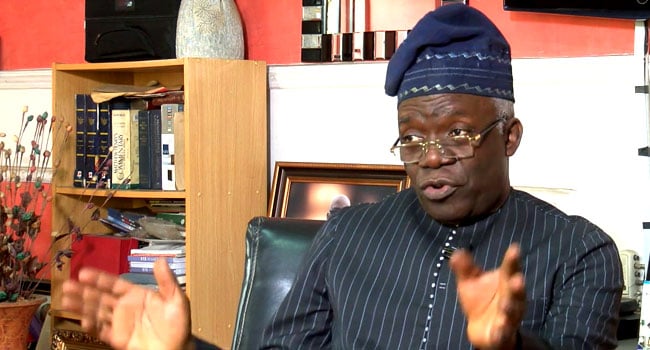
A political development with potential implications for Nigeria’s 2027 electoral landscape emerged following a meeting between prominent public figures, Mahmud Hashim and Femi Falana, who jointly expressed strong opposition to any move toward a one-party system in the country.
The meeting, described as strategic and consultative, focused on the current state of Nigeria’s democracy and concerns about increasing political consolidation that could weaken pluralism. Both men reportedly emphasized that a healthy democratic system depends on the existence of vibrant opposition voices, competitive elections, and institutional checks and balances.
Speaking after their engagement, they warned that any drift toward a one-party structure—whether deliberate or gradual—could undermine democratic freedoms, limit political participation, and erode public trust in governance. They stressed that Nigeria’s democratic journey, shaped by years of struggle and reform, must not be compromised by actions or policies that concentrate political power in a single bloc.
They also highlighted the importance of safeguarding electoral integrity, strengthening independent institutions, and ensuring that opposition parties are allowed to operate without intimidation or structural disadvantage. According to them, the role of civil society, the judiciary, and the media remains critical in holding power to account and preventing democratic backsliding.
As part of their position, they called on political stakeholders, including parties, youth groups, and civic organizations, to remain vigilant and actively engaged in defending democratic principles ahead of the 2027 general elections. They encouraged broader collaboration among pro-democracy actors to ensure that Nigeria continues to operate as a multi-party state where diverse views are represented.
Observers note that the meeting reflects growing discourse around the future of Nigeria’s political system, particularly as alignments and realignments begin to shape the pre-election environment. While no formal coalition or movement was announced, the engagement signals a willingness among key voices to resist any perceived threats to democratic plurality.
The development is expected to spark further conversations within political and civic spaces, as stakeholders weigh in on the direction of governance and the need to preserve democratic norms in the lead-up to the next electoral cycle.