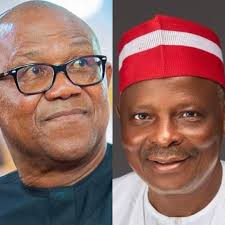
A senior political figure, Dan Ulasi, has expressed strong optimism about the potential impact of a joint presidential leadership involving Peter Obi and Rabiu Musa Kwankwaso, stating that such an arrangement could usher in a new phase of development across Nigeria.
Ulasi made the remarks during a political engagement where he addressed ongoing discussions around alliances and realignments ahead of future elections. He emphasized that both Obi and Kwankwaso possess complementary leadership qualities, administrative experience, and political followings that could be leveraged to drive national progress.
According to him, the combination of Obi’s reputation for fiscal discipline and governance reforms, alongside Kwankwaso’s grassroots political structure and experience in public administration, presents a balanced leadership model capable of addressing Nigeria’s socio-economic challenges. He suggested that such a partnership could strengthen policy execution, improve institutional performance, and restore public confidence in governance.
Ulasi further argued that Nigeria’s development requires leaders who can prioritize economic stability, job creation, infrastructure expansion, and human capital development. He noted that a collaborative leadership approach could also enhance national unity by bridging regional and political divides.
While acknowledging that discussions about alliances remain fluid, he encouraged political stakeholders to consider strategic partnerships that place national interest above partisan considerations. He stressed that coalition-building could be a decisive factor in shaping the outcome of future elections and in determining the direction of governance.
His comments have added to the growing conversation within political circles about possible alignments among opposition figures and the broader implications for Nigeria’s democratic landscape. Supporters of both leaders have welcomed the idea, citing the potential for reform-driven leadership, while critics maintain that such projections remain speculative until formal political decisions are made.
As political activities gradually intensify, Ulasi’s position reflects a broader sentiment among some stakeholders advocating for new leadership dynamics aimed at accelerating development and strengthening democratic governance in Nigeria.