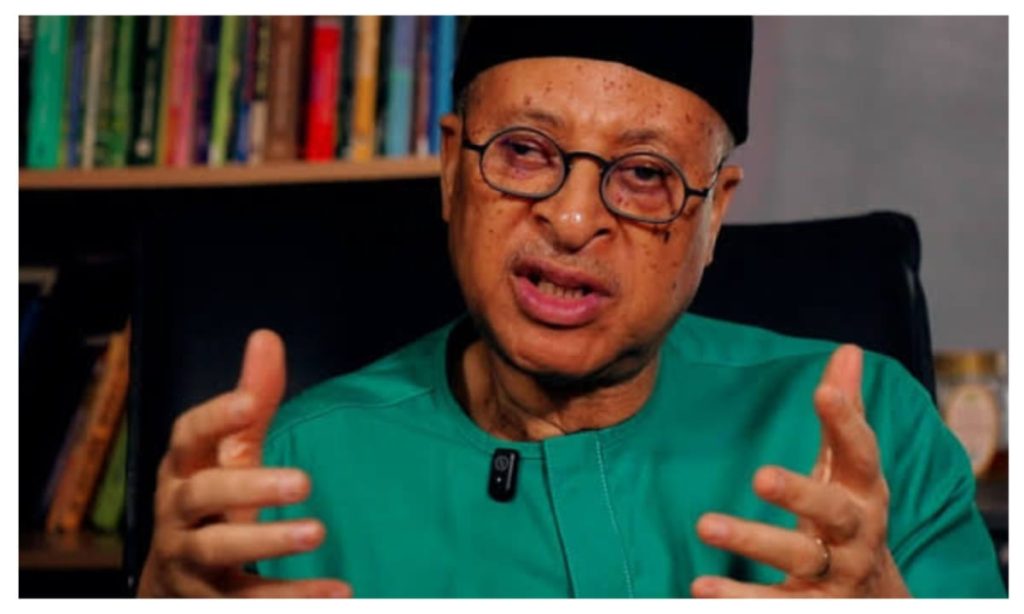
Professor of Political Economy, Pat Utomi, has questioned the growing criticism and political attacks directed at former Anambra State Governor and 2027 presidential hopeful, Peter Obi, despite his third-place finish in the 2023 Nigerian presidential election.
Utomi expressed concern over what he described as an unusual level of hostility towards Obi, questioning why a politician who finished third in the last presidential election has continued to attract criticism from different political quarters.
The professor made his position known in a statement shared on his verified X account on Saturday, November 7, 2026.
According to Utomi, the intensity of the attacks against Obi raises important questions about the country’s political environment and the circumstances surrounding the 2023 presidential election.
He argued that there was no convincing explanation for why Obi had become a recurring target of criticism from different directions.
Utomi Questions Political Attacks Against Obi
In his reaction, Utomi wondered why political figures appeared increasingly concerned about Obi’s political activities ahead of the 2027 general elections.
He suggested that the level of attention and criticism directed at the former Anambra governor deserved closer examination.
The political economist further observed that Nigerians might eventually understand the underlying circumstances surrounding the 2023 election and the political developments that followed.
Although Utomi did not specifically identify the individuals or political organisations responsible for the alleged attacks, his comments have drawn attention to the growing political tension surrounding Obi’s 2027 presidential ambition.
Tinubu, Shettima and Oshiomhole Criticise Peter Obi
Utomi’s comments come amid a series of public criticisms of Obi by prominent members of the ruling All Progressives Congress (APC).
President Bola Tinubu recently criticised Obi during an APC political rally in Uyo, Akwa Ibom State, making references to erosion challenges in Anambra State during Obi’s tenure as governor.
Tinubu compared Obi’s handling of erosion challenges in Anambra with his own experience confronting coastal challenges in Lagos State.
Similarly, Vice President Kashim Shettima criticised Obi, accusing him of losing public goodwill and questioning his political messaging ahead of the 2027 elections.
Senator Adams Oshiomhole has also made critical remarks about Obi, questioning his political approach and capacity to provide an alternative to the current administration.
These developments have further intensified political exchanges between supporters of the ruling party and those backing Obi’s presidential ambition.
Peter Obi’s 2027 Presidential Ambition
Peter Obi, who contested the 2023 presidential election under the Labour Party, is positioning himself for another presidential contest in 2027.
In the 2023 election, Obi secured 6,101,533 votes, finishing third behind President Bola Tinubu and former Vice President Atiku Abubakar.
Despite finishing third, Obi emerged as a significant opposition figure, particularly among young Nigerians and voters who demanded changes in governance, economic management and political accountability.
His political influence has remained a major subject of discussion as political parties and influential figures begin positioning themselves ahead of the next general election.
Obi’s move to the Nigeria Democratic Congress (NDC) has also added another dimension to the emerging political calculations surrounding the 2027 presidential race.
Growing Political Tension Ahead of 2027
The latest exchange highlights the increasing political tension as Nigeria approaches another general election.
With opposition figures seeking to challenge the ruling party, political disagreements, public criticisms and competing political narratives are expected to remain prominent features of the election campaign.
Utomi’s intervention has also raised questions about whether the sustained criticism of Obi reflects ordinary political competition or concerns among rival political camps about his potential influence in the 2027 election.
However, the professor did not provide a definitive explanation for the attacks, leaving the question open for further political debate.
Nigerians Await Answers
Utomi’s remarks have added to the ongoing national conversation about political competition, opposition politics and the future of Nigeria’s democracy.
His central argument is that the level of hostility directed at Obi deserves an explanation, particularly considering his third-place finish in the 2023 presidential election.
As preparations for 2027 continue, the political atmosphere surrounding Obi is likely to remain a major issue in the country’s evolving political landscape.
The big question remains: Why has Peter Obi become such a prominent target of criticism among influential political figures ahead of the 2027 presidential election?
For Utomi, Nigerians may have to wait until the future to fully understand what really happened in 2023.