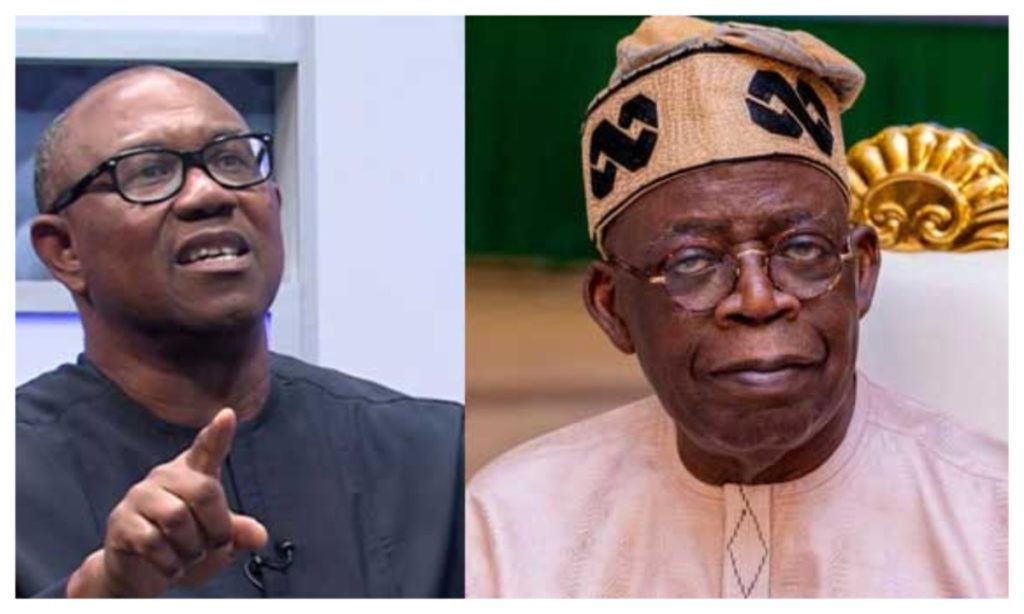
Peter Obi Challenges Tinubu Over ₦15.8 Trillion Fuel Subsidy Savings and $100 Billion Borrowing: “Where Is the Money?”
Former Anambra State Governor and presidential candidate of the Nigeria Democratic Congress (NDC), Peter Obi, has challenged President Bola Ahmed Tinubu to explain how his administration has utilised the estimated ₦15.8 trillion generated from fuel subsidy removal and nearly $100 billion in accumulated borrowing.
Obi questioned the government’s financial accountability, demanding that Nigerians be provided with a transparent explanation of how the funds have been spent and the tangible benefits citizens have received since the administration introduced its economic reforms in May 2023.
The former governor raised the concerns during a political engagement in Enugu State, where he addressed issues surrounding Nigeria’s economic situation, government borrowing, public expenditure and the country’s development priorities.
Obi Questions Where ₦15.8 Trillion Fuel Subsidy Savings Went
Obi expressed concern over the financial consequences of the removal of petrol subsidy, arguing that Nigerians have continued to experience severe economic hardship despite the enormous financial resources reportedly freed up by the policy.
He questioned why the sacrifices made by Nigerians through increased petrol prices, transportation costs and rising food prices had not translated into sufficient improvements in their standard of living.
The former governor maintained that subsidy removal should be accompanied by responsible management of the resources generated from the policy.
According to him, government must demonstrate how the additional revenue has been invested in critical sectors capable of improving the lives of ordinary Nigerians.
He argued that the resources should have been channelled towards infrastructure, education, healthcare, electricity, job creation and other productive sectors of the economy.
Peter Obi Demands Explanation Over Nearly $100 Billion Borrowing
Beyond the fuel subsidy savings, Obi also questioned the Tinubu administration over its borrowing activities since assuming office.
He demanded an explanation of how nearly $100 billion in accumulated borrowing had been utilised, insisting that Nigerians deserve to know the projects financed through the loans and the results achieved.
Obi argued that borrowing should be tied to clearly defined development objectives, measurable outcomes and projects capable of generating economic value.
He maintained that government borrowing should not become an endless financial obligation without corresponding improvements in the country’s infrastructure, productivity and economic opportunities.
The former governor also stressed that Nigerians should not be left to bear the burden of repaying enormous public debts without knowing how the borrowed funds have benefited them.
Government’s Explanation of Fuel Subsidy Savings
The Federal Government has previously provided an explanation of the financial resources generated following the removal of petrol subsidy.
In August 2026, the Minister of Finance and Coordinating Minister of the Economy, Taiwo Oyedele, disclosed that the removal of petrol subsidy generated approximately ₦15.8 trillion in additional resources for the federation between June 2023 and December 2025.
According to the minister, the Federal Government received approximately ₦5.4 trillion, while about ₦10.4 trillion was shared among state and local governments through the Federation Account.
Oyedele also explained that the Federal Government recorded approximately ₦20.4 trillion in incremental resources during the period when additional independent revenue and borrowing were considered.
However, he disclosed that additional expenditure during the same period amounted to approximately ₦30.64 trillion.
The government maintained that the resources were deployed towards various expenditure obligations, including public sector wages, debt servicing and infrastructure development.
Nevertheless, the figures have continued to generate debate over fiscal transparency, public spending and the actual economic benefits of the subsidy removal policy.
Nigerians Continue to Face Economic Hardship
The controversy surrounding subsidy savings and government borrowing comes amid persistent concerns over the rising cost of living in Nigeria.
Since the removal of petrol subsidy, households and businesses have faced increased transportation, production and distribution costs.
The depreciation of the naira, rising food prices, unemployment and higher operating expenses have also placed considerable pressure on individuals and businesses.
Obi has consistently argued that economic reforms should not be measured exclusively by the amount of money saved by government but by their impact on the living conditions of citizens.
He has maintained that successful economic management must translate into improved purchasing power, employment opportunities, affordable healthcare, quality education and sustainable economic growth.
Obi Calls for Transparency and Accountability
The NDC presidential candidate has continued to emphasise the importance of transparency in the management of public resources.
He believes Nigerians have a democratic right to demand explanations from elected officials regarding government revenue, borrowing and expenditure.
Obi has also argued that public funds should be managed with discipline and directed towards projects that produce measurable economic and social benefits.
According to his position, Nigeria requires leadership that prioritises accountability, prudent financial management and responsible utilisation of national resources.
Political Implications Ahead of the 2027 Elections
Obi’s latest criticism adds to the growing political debate surrounding the Tinubu administration’s economic policies as political activities intensify ahead of the 2027 general elections.
With opposition politicians increasingly questioning the government’s borrowing and expenditure decisions, economic accountability is expected to remain a major issue during the forthcoming election campaign.
The debate also places pressure on the administration to communicate more effectively how its economic reforms have translated into tangible improvements for Nigerians.
For Obi, the central issue is not simply how much money government has saved or borrowed but whether those resources have improved the lives of ordinary citizens.
The former Anambra governor’s challenge raises a fundamental question for the Tinubu administration: Where are the benefits of the ₦15.8 trillion subsidy savings and the nearly $100 billion in borrowing, and what concrete improvements can Nigerians point to?